Homes rarely become messy because someone is lazy. They become messy because there isn’t a clear place for the constant inflow of objects: papers, clothes, daily gear, and all the small items we set down “just for now.” The 5-Basket Method solves this by giving every type of item a fast, obvious home and creating a simple routine that works for both busy families and individuals. The system is flexible, works in any size home, and helps prevent clutter before it starts.
The Five Baskets
The method relies on five clearly defined baskets:
- Incoming: mail, school papers, receipts, returns.
- Tools: chargers, tape, scissors, batteries, light bulbs.
- Daily Gear: keys, wallets, sunglasses, masks, access cards.
- Laundry-in-Waiting: socks, dish towels, sports kits, anything “I’ll wash later.”
- Outbound: library books, donations, returns to friends or stores.
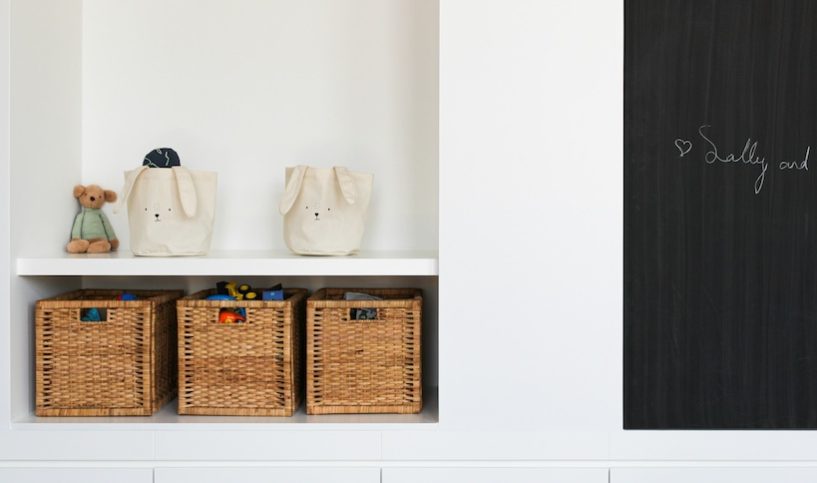
Choose medium-sized baskets with handles and a single consistent color to reduce visual clutter. Use durable plastic for wet or high-traffic zones, and woven or fabric baskets in main living areas. If space is limited, choose stackable ones.
Labeling That Works in Real Life
Labels turn baskets from “storage” into a system. Use clear, bold wording—INCOMING, TOOLS, GEAR, LAUNDRY, OUTBOUND. For children, add simple icons to help them identify what goes where. Stick-on label holders are the most practical because they can be changed as your needs evolve. Place labels on the front and also on the top lip so they’re easily visible when you walk by.
Where the Baskets Should Live
Placement is key:
- Incoming: near your main door, on a console or wall shelf.
- Tools: wherever you commonly search for tape or chargers—often the kitchen or living room cabinet.
- Daily Gear: at your most used entryway, ideally next to a key hook or small tray.
- Laundry-in-Waiting: in a bathroom or hallway near bedrooms, with a small mesh bag clipped inside for stray socks.
- Outbound: beside the door or in the car trunk so items actually leave the house instead of circulating endlessly.
Simple Micro-Rules to Keep It Running
These mini rules keep the system effortless:
- One move only: If it’s in your hand and belongs in a basket, drop it in immediately. No thinking, no detours.
- No mixing: When a basket fills, you empty and process it—never overflow into another.
- Kid-friendly jobs: Even young children can place library books in OUTBOUND or socks in LAUNDRY. Turning it into a quick race makes it fun.
The Weekly Reset Routine (20–30 Minutes)
Pick a consistent time each week—Friday night or Sunday afternoon—and give each family member a basket to start with. Add music to make it easier.
- Incoming (6–8 min): open mail, sign papers, scan receipts, recycle envelopes. Tasks needing follow-up go onto an Action board or your to-do list.
- Tools (3–4 min): rewind cables, test batteries, toss dead pens, refill tape. Keep only one of each small item here.
- Daily Gear (3–4 min): return sunglasses to their spots, wipe trays, clear old coupons, confirm everyone’s essentials are ready.
- Laundry-in-Waiting (5–6 min): transfer items to the washing machine or sort by color. Empty the sock bag into a bowl and match pairs.
- Outbound (4–6 min): donations go into a trunk bag, returns with receipts into a clear pouch, and reminders are added to your calendar.
Maintenance Through the Week
- 60-second nightly sweep: toss scattered items into their baskets.
- Leaving rule: check OUTBOUND before heading out.
- Arriving rule: GEAR first (keys, sunglasses), then shoes off, then anything in hand into INCOMING. Repeat the same order every time to build habit memory.
Troubleshooting
If Incoming overflows, insert dividers: To File / To Pay / To Recycle. If Tools becomes chaotic, shrink its category. For kids’ artwork, display two pieces per week, then photograph and recycle or store.
Try It Today
Pick five matching baskets, label them, and place them in the recommended spots. Run your first 30-minute reset tonight. Within a week, you’ll notice clearer surfaces, smoother mornings, and a home that stays tidy with small, consistent habits rather than big cleanups.
Photo by Taru Goyal on Unsplash.