Long before co-working spaces, group chats, and social calendars, there was the majlis. A place to sit, talk, listen, disagree, and belong. While its form has evolved, the essence of the majlis remains deeply relevant. At its core, it is not about furniture or formality. It is about presence, conversation, and shared time.
Across cultures, humans have always created informal gathering spaces. Sociologist Ray Oldenburg famously described these as “third places,” meaning spaces that exist outside home and work. In his book The Great Good Place, he wrote that third places are essential to community life because they foster connection, dialogue, and a sense of belonging. The majlis fits squarely within this idea, long before the term existed.
Traditionally, the majlis served as a social and civic space. People gathered to exchange news, resolve disputes, welcome guests, and strengthen communal ties. Conversation was unstructured but meaningful. Listening mattered as much as speaking. Time moved differently there, slower and more generous.
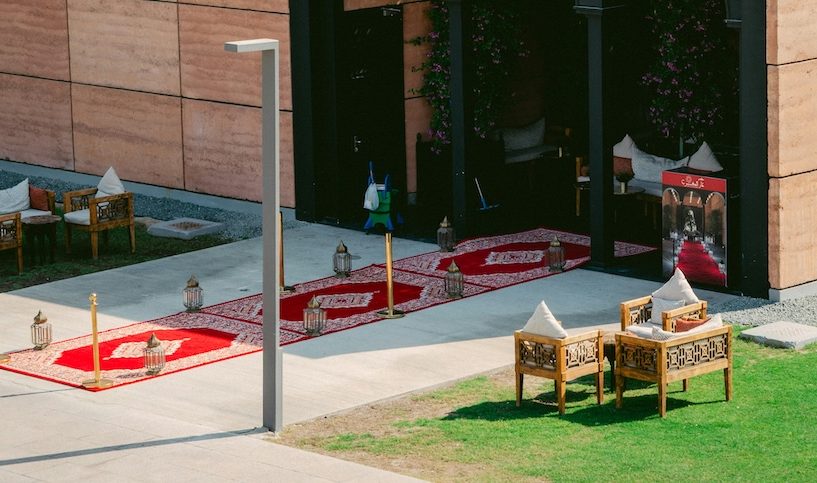
Today, the settings may look different. A modern majlis might be a living room, a long dining table, a shaded terrace, or even a recurring coffee gathering. What defines it is not architecture, but intention. It is a space where people show up not to perform, but to participate.
Modern life has made such spaces harder to sustain. Schedules are tighter, attention is fragmented, and digital communication often replaces physical presence. Messages are efficient, but they lack texture. Tone is flattened. Nuance is lost. The majlis, in contrast, invites depth. It allows for pauses, for reading the room, for disagreement without disconnection.
This is why the modern majlis is not a nostalgic concept. It is a response to contemporary pressures. As social interactions become increasingly transactional, spaces that encourage unstructured conversation become more valuable, not less. They counterbalance speed with slowness and output with presence.
One defining feature of the majlis is inclusivity. Traditionally, anyone could enter, sit, and be heard. Status softened in the shared space. While modern versions may be smaller or more curated, the principle still applies. A true gathering space allows different perspectives to coexist. It does not require consensus, only respect.
Another key element is repetition. Majlis culture thrives on regularity. Weekly gatherings, open-door evenings, or recurring meals build trust over time. People speak differently when they know the space will exist again. There is less urgency to conclude, less pressure to impress. Continuity creates safety.
The physical environment supports this ethos. Seating that encourages face-to-face conversation. Lighting that softens rather than spotlights. Food that is shared rather than plated individually. These choices are not decorative. They shape how people interact. When the space feels welcoming, conversation follows.
Importantly, the modern majlis is not about scale. It does not require large homes or elaborate hosting. A few chairs arranged intentionally can be enough. What matters is the signal the space sends: you are welcome here, as you are, without agenda.
In many ways, the majlis offers an antidote to performative socializing. There is no audience. There is no feed. What happens in the room exists for the people in it. This privacy allows honesty to surface. Stories unfold naturally. Silence is permitted.
Psychologists have consistently linked social connection with wellbeing. While not all interaction nourishes, meaningful conversation does. Spaces like the majlis create the conditions for that depth. They allow people to feel seen, heard, and grounded within a community.
The modern majlis also adapts. It can include structured discussions or remain open-ended. It can be intergenerational or peer-based. It can live in homes, cultural spaces, or borrowed corners of public life. Its strength lies in flexibility anchored by intention.
At a time when loneliness is often described as a modern epidemic, reclaiming spaces of gathering becomes an act of care. Not every conversation needs to be productive. Not every meeting needs an outcome. Sometimes, sitting together is enough.
The majlis endures because it speaks to something fundamental: the human need to gather without purpose beyond connection. In modern form, it reminds us that community is not built through efficiency, but through time, presence, and shared space.