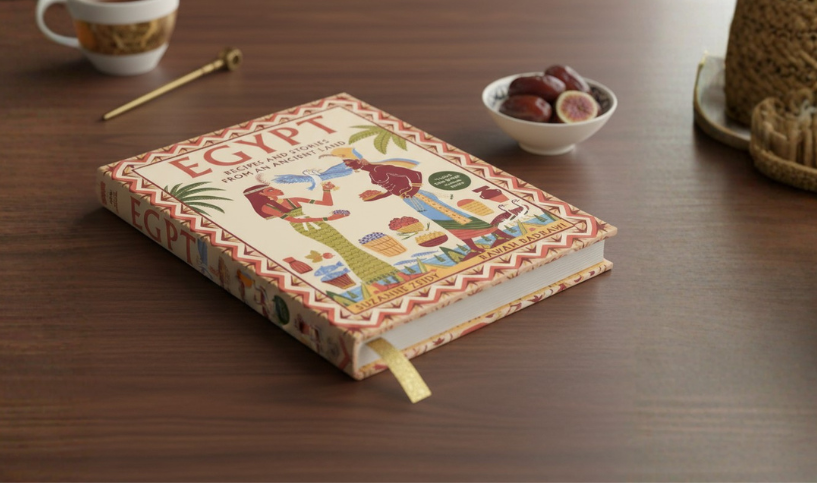
Rawah Alfalah Badrawi earliest memories are anchored around a table. Growing up in Kuwait City, meals were never rushed or incidental. They were moments of reverence, shaped by geography, migration, and ritual. Weekend lunches were cooked slowly over an open fire at the family’s beach cabin, where her father transformed simple ingredients into something sacred. Kuwait’s position between Iran and Iraq infused the family table with Persian saffron and rosewater alongside Iraqi grilled fish and kubbah, while stories of pearl divers returning with spices from Mumbai and Hyderabad added yet another layer. Food, for Badrawi, became an early lesson in history, movement, and cultural exchange. That understanding deepened years later when she moved to Cairo and encountered Egyptian cuisine as a living mosaic, shaped by thousands of years of civilisation, conquest, and exchange.
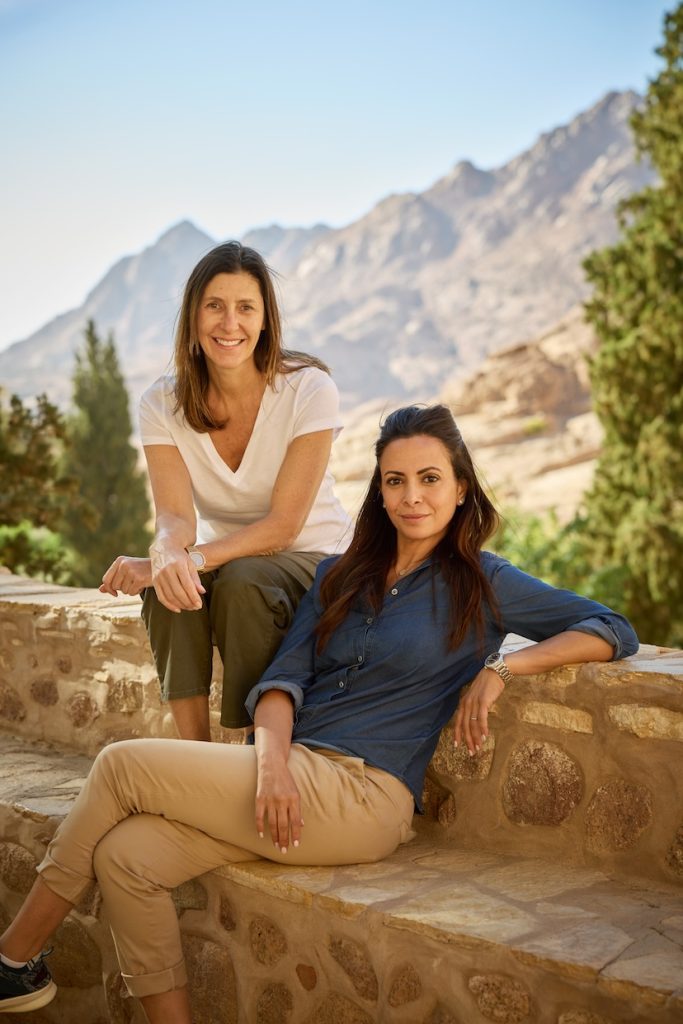
For Suzanne Zeidy, food was also a bridge between worlds. Raised in Cairo by an Egyptian father and an American mother, the kitchen became the place where identity was negotiated and memory preserved. Her father cooked entirely from instinct, guided by taste and recollection rather than recipes or measurements. Her mother, shaped by the hospitality of the American South, taught her the value of precision, structure, and the quiet satisfaction of a well-written recipe. Between intuition and discipline, Zeidy developed a lifelong passion for food and hospitality, and a fascination with how recipes travel through generations. That path eventually led her into Cairo’s restaurant world, where she founded La Bodega, Cilantro, and Cairo Kitchen, before documenting everyday Egyptian food culture in her first book.
Long before they imagined writing a book together, Badrawi and Zeidy became neighbours near the Abu Sir pyramids. They raised their families side by side, shared meals, and built a friendship rooted in conversation, curiosity, and food. Egypt: Recipes and Stories from an Ancient Land grew organically from that shared life. Rather than setting out to write a traditional cookbook, they wanted to tell a broader story. “To understand food fully, you have to place it in the context of people and place,” they explain. “That is where its real meaning comes from.”
Egypt is often reduced to a handful of iconic dishes, but Badrawi and Zeidy were determined to move beyond that narrow framing. “You cannot reduce a country’s culinary identity to one plate,” they say. Egyptian food reflects geography as much as history. The Nile that runs through the country, the Mediterranean in the north, the deserts flanking the river, the Red Sea coast, and the southern border with Sudan all shape how Egyptians cook and eat. Too often, the story stops at Cairo. For this book, they divided the country by landscape and sought out representative towns and communities in each region.
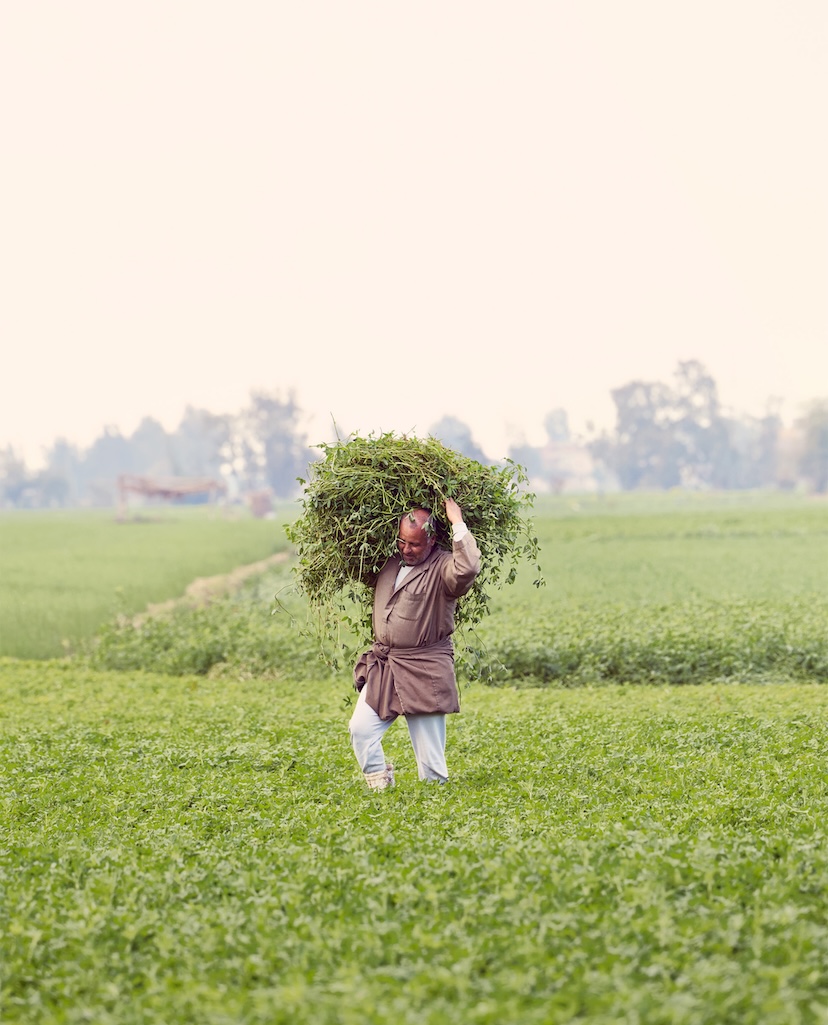
Their journey took them on long drives across Egypt, into homes and kitchens rarely documented. From the Amazighs of Siwa to the Nubians of Aswan, foodways became as important as the recipes themselves. In Aswan, Nubian and Sudanese influences intertwine through spice, bread, and cooking methods. In Siwa, Libyan and Saharan traditions appear in couscous and tagines. Along the Mediterranean coast, particularly in Alexandria and Marsa Matruh, European influences merge seamlessly with local ingredients. Food, they discovered, tells stories of overlap and migration long before borders existed.
Among all the places they visited, Siwa left a lasting impression. Isolated for centuries, the oasis developed its own language, customs, and culinary traditions. Siwan food is deeply connected to the land, shaped by dates, olives, and salt harvested from nearby lakes. “Food there is an expression of identity,” they explain. “It has been preserved through generations with very little outside influence.” Experiencing that level of continuity gave them a new appreciation for how geography and isolation can shape cuisine in profoundly local ways.
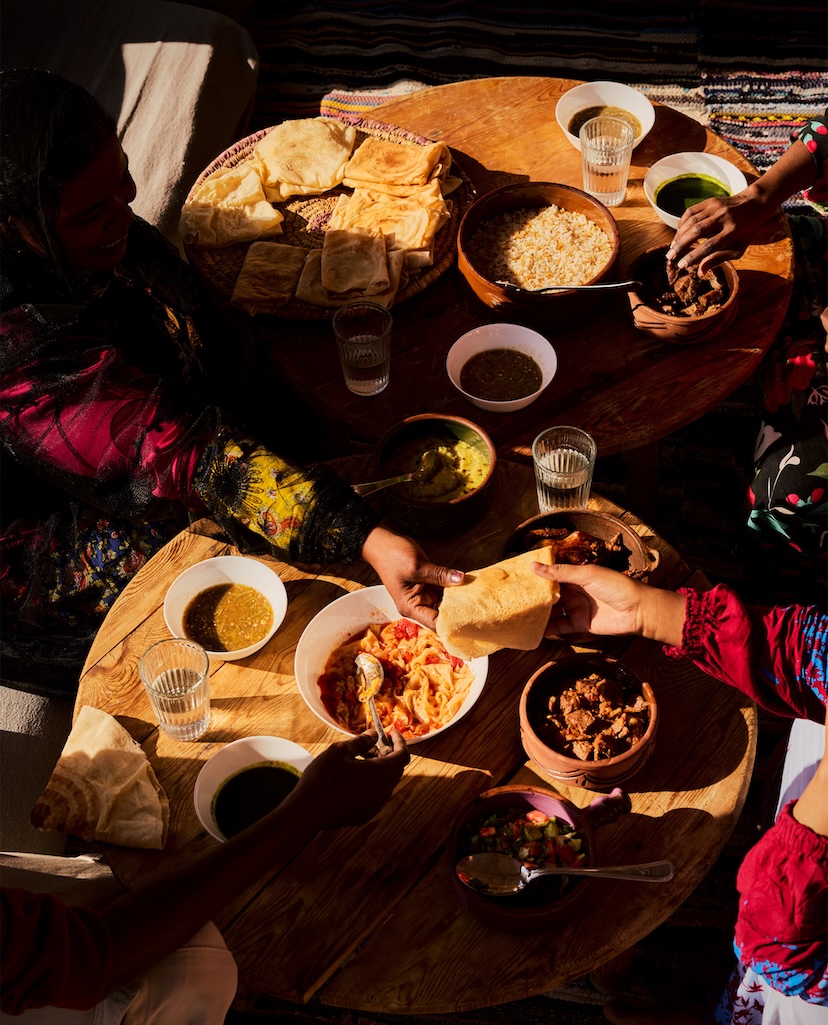
The authors were equally intentional about who they learned from. Rather than gathering recipes from professional chefs, they cooked alongside home cooks. Many of the dishes they documented had never been written down before, passed instead from mother to daughter, neighbour to neighbour, through memory and instinct. “Most Egyptian home cooks do not measure,” they say. “They cook with nafas, intuition and feeling.” Translating that sensory knowledge into accessible recipes required patience and presence. Each dish came with a story, a memory, and a piece of someone’s life.
Ancient cooking methods and ingredients also played a central role in shaping the book. Some recipes, such as aish shamsi or sun bread, have changed very little over thousands of years. Others evolved into techniques that later spread across the world. The authors point to foie gras as an example, tracing its origins to ancient Egyptian observations of migrating birds. In the book, they honour that history through a modern chicken liver pate paired with fig conserve, echoing the ancient connection rather than replicating it.
Not every tradition could be translated for the modern home cook. Feseekh, the fermented grey mullet eaten during Sham El Nessim, is deeply symbolic but risky to prepare incorrectly. Rather than including a recipe, Badrawi and Zeidy chose to explore its cultural significance. “This book is not an encyclopedia,” they explain. “It is a carefully curated journey.”

That sense of curation is especially clear in the Heirloom Cairo section, which celebrates the capital’s mixed heritage through family recipes tied to migration and memory. One of the most personal stories comes from a Circassian chicken dish, Sharkaseya, shared by a Cairene family of Turkish ancestry. The recipe arrived in Egypt via the Ottoman court and took pride of place in certain homes. “What mattered were the small details,” they recall. “Not just how the dish was cooked, but how it was presented and why.”
Cultural exchange appears everywhere on the Egyptian table. In Port Said, Levantine trade routes introduced nuts into local dishes. In Alexandria, Greek cuisine shaped fish stews, bakes, and desserts. In the south, Nubian and Sudanese traditions influence bread-based meals and hearty stews. Even okra transforms across regions, appearing fresh in herb sauces, dried and powdered into weika, or slow-cooked in clay pots. The ingredient remains the same, but the expression is entirely local.
Photography and illustration play a vital role in bringing these stories to life. Photographer Jonathan Gregson captures dishes as they would appear on location, surrounded by natural light, textiles, and everyday serving ware. Illustrations act as atmospheric chapter openers, adding symbolism and romance that words alone cannot convey.
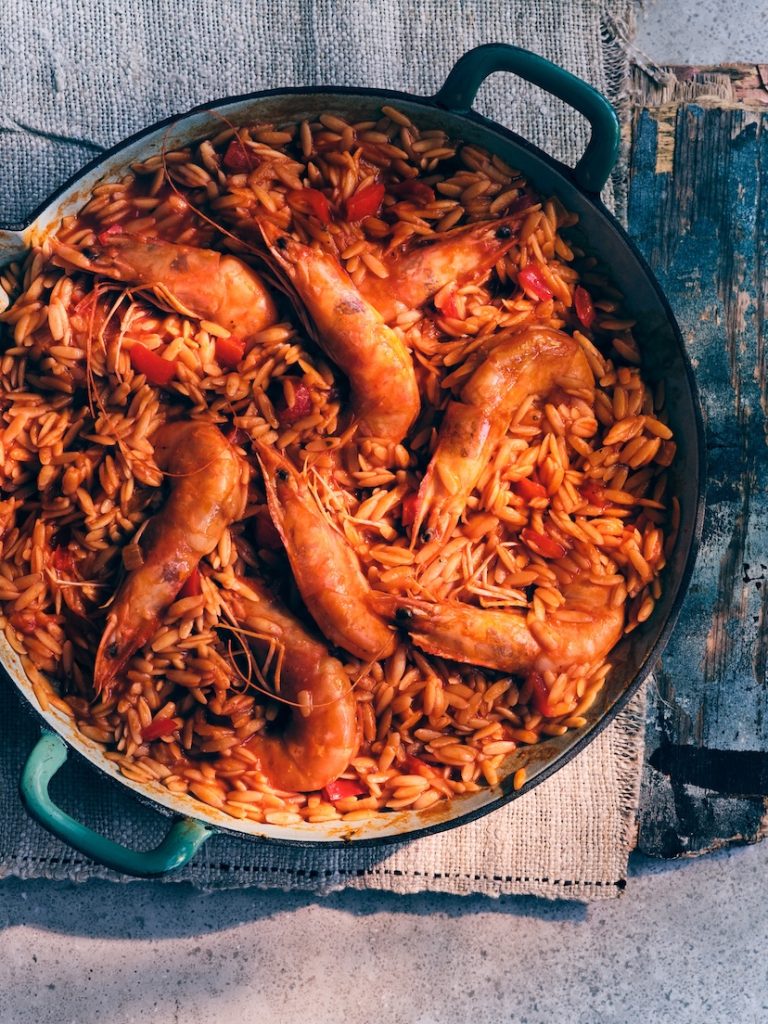
If a reader were to cook only three recipes to understand Egypt, the authors suggest starting with weika and fitti bread from the Nubian south, prawn m’bakbaka from Marsa Matruh, and Alexandrian macarona bechamel. Together, they reveal how food travels, adapts, and absorbs layers of influenc
Ultimately, Egypt: Recipes and Stories from an Ancient Land aims to change how Egyptian cuisine is viewed globally. “Egypt has long been overshadowed by its monuments,” they say. “People often say Egypt is not known for its food, but that overlooks one of the world’s oldest and most continuous culinary traditions.” The country’s finest food, they argue, has always lived in homes rather than restaurants
After years on the road, what remains most vivid is the generosity they encountered everywhere. Families opened their doors, shared their tables, and offered stories with warmth and pride. “We were humbled at every turn,” they say. That generosity, they believe, is the true essence of Egyptian food. Not just what is cooked, but how it is shared, and the connection that forms when people sit down to eat together.
EGYPT: Recipes & Stories from an Ancient Land’ is available for pre-order on Amazon, Waterstones, Barnes & Noble. Follow Rawah and Suzanne on Instagram: @rawahbadrawi and @suzannezeidy.