
At first glance, Zuriel Oduwole does not introduce herself as a Nobel Peace Prize nominee, a diplomat, or a global education advocate who has advised presidents and negotiated peace at the United Nations. Instead, she calls herself “the girl next door trying to make a difference where she can, and at every opportunity.”
That contrast sits at the heart of Oduwole’s story. At just 23, the Los Angeles California native, born to parents from England [mother] and Scotland [father], has built a life that bridges worlds rarely held together: diplomacy and design, activism and artistry, education advocacy and couture. Her newest chapter, OXUDE, a luxury maison debuting a capsule collection of ultra-bespoke, hand-woven trousers, is not a departure from her life’s work. It is a continuation of it, rendered in fabric.
Oduwole’s sense of mission was shaped long before fashion entered the conversation. At nine years old, she watched a documentary about a 12-year-old girl being forced into marriage. “It was a different kind of cry,” she recalls. “Not the ‘I lost my doll’ kind, but one that was terrifying.”
That moment stayed with her. Soon after, a school film project took her to Ghana, where she saw girls selling goods on the streets of Accra instead of attending school. The connection became clear. When girls are educated, child marriage becomes harder to enforce. When education disappears, vulnerability grows.
Since then, Oduwole’s life has unfolded at an extraordinary pace. She has taught filmmaking to girls across Central America, Africa and beyond, mediated in peace discussions, spoken to tens of thousands of young people in more than 20 countries, and contributed to policy-level change that has helped end child marriage for over a million girls.
“It is intense work,” she says candidly. “Leadership demands a lot. Sometimes we pick our fights, and other times our fights pick us.”
The idea for OXUDE did not emerge from trend forecasting or a desire to enter the luxury market. It came from necessity. Funding advocacy work required constant fundraising, and Oduwole wanted an alternative that was both sustainable and aligned with her values.
“I realized there had to be many ways to educate girls and keep them out of early marriage,” she explains. “Education is bigger than school. Some girls leave school because they struggle academically, or because of pregnancy. I created what I call alternative education to keep them engaged.”
Fashion became the answer after years of research and planning. Not fast fashion, and not accessible luxury, but something deliberately rare, high-end, and uncompromising. “I needed something special,” she says. “Something that could fund our work without seeming to beg for money through constant fundraising.”
OXUDE was born in 2025 after nearly two years of conceptual development.
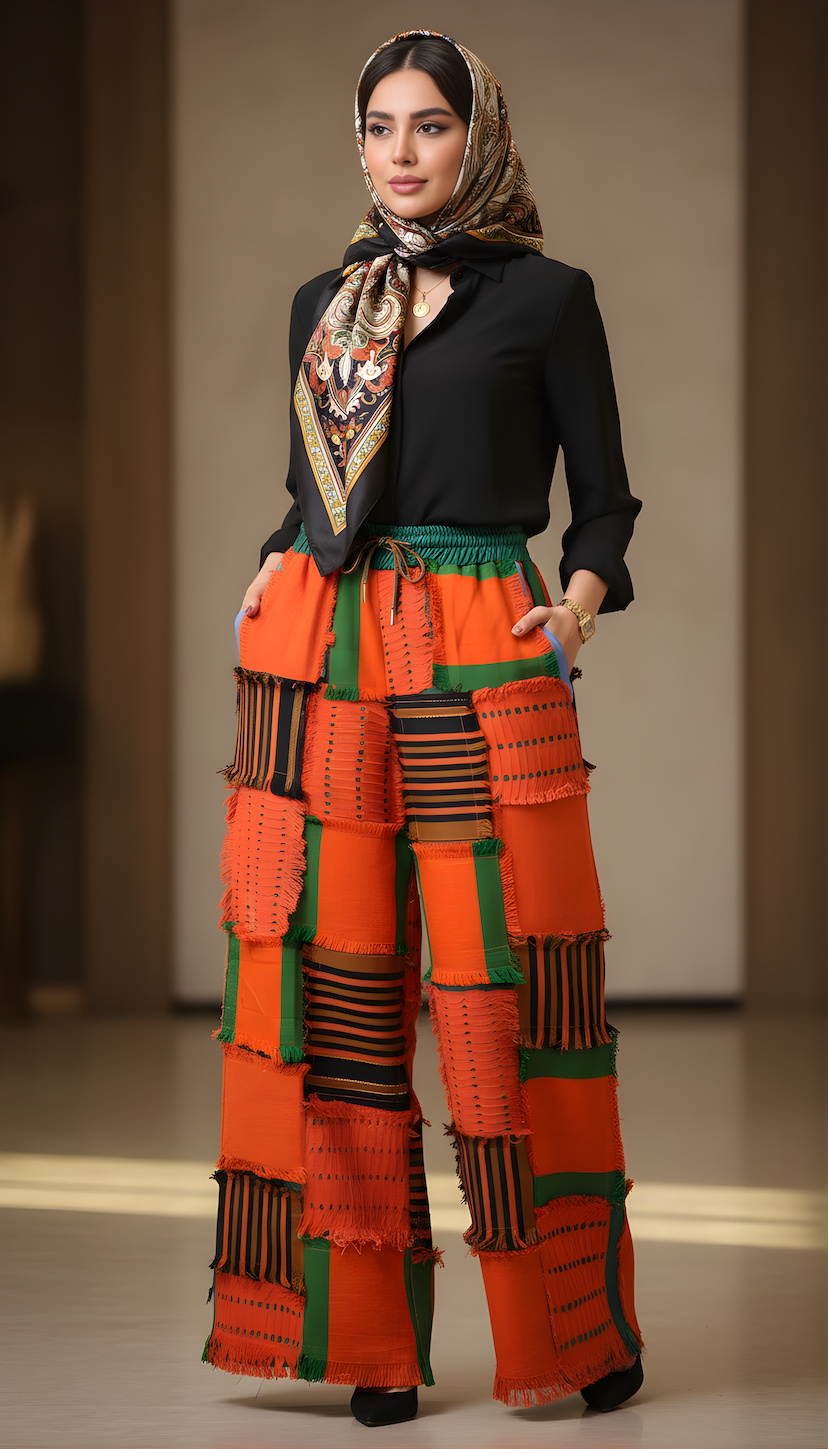
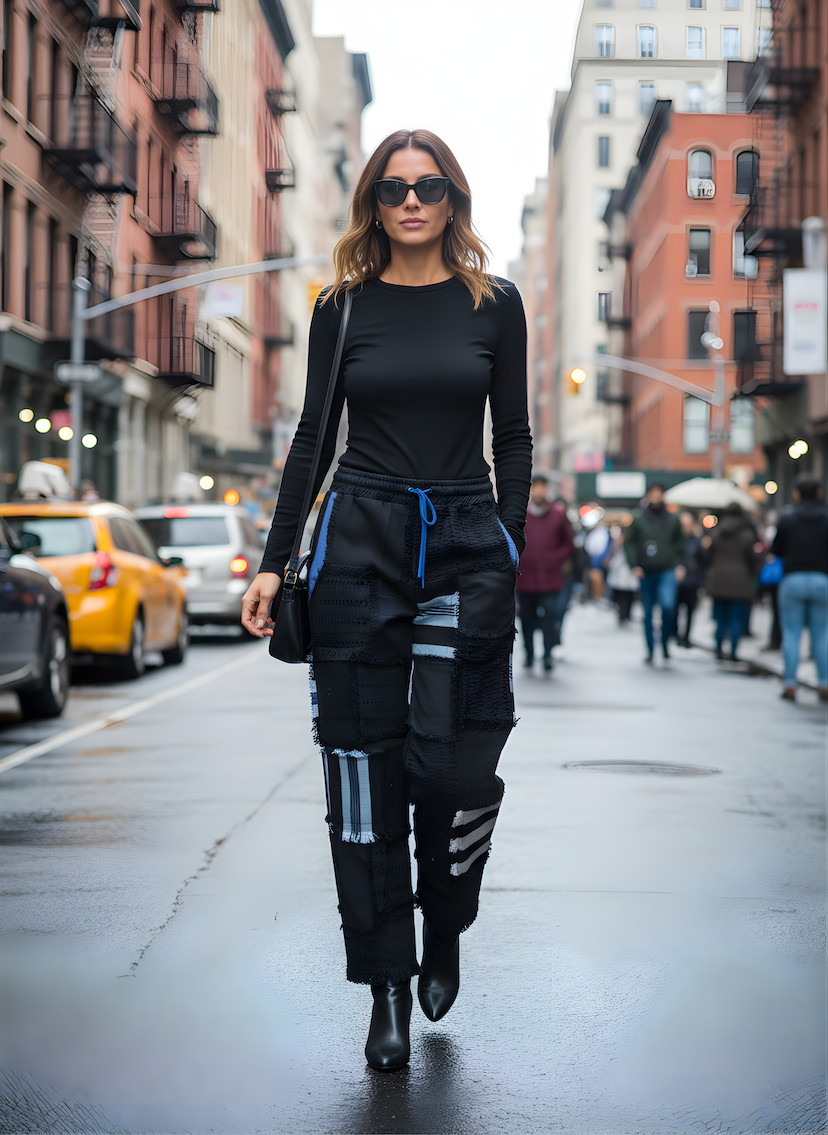
OXUDE’s debut collection consists of just ten designs and colors of hand-woven trousers, each retailing at just $3,950 for a one-of-a-kind handmade creation and always depends on fabric yarn availability. No two are alike, and none can ever be replicated. The fabrics are woven using 18th-century techniques, with yarns sourced across African continent, from the Berbers in Mauritania to Ashantis in Ghana and down to Southern Africa and everywhere in between.
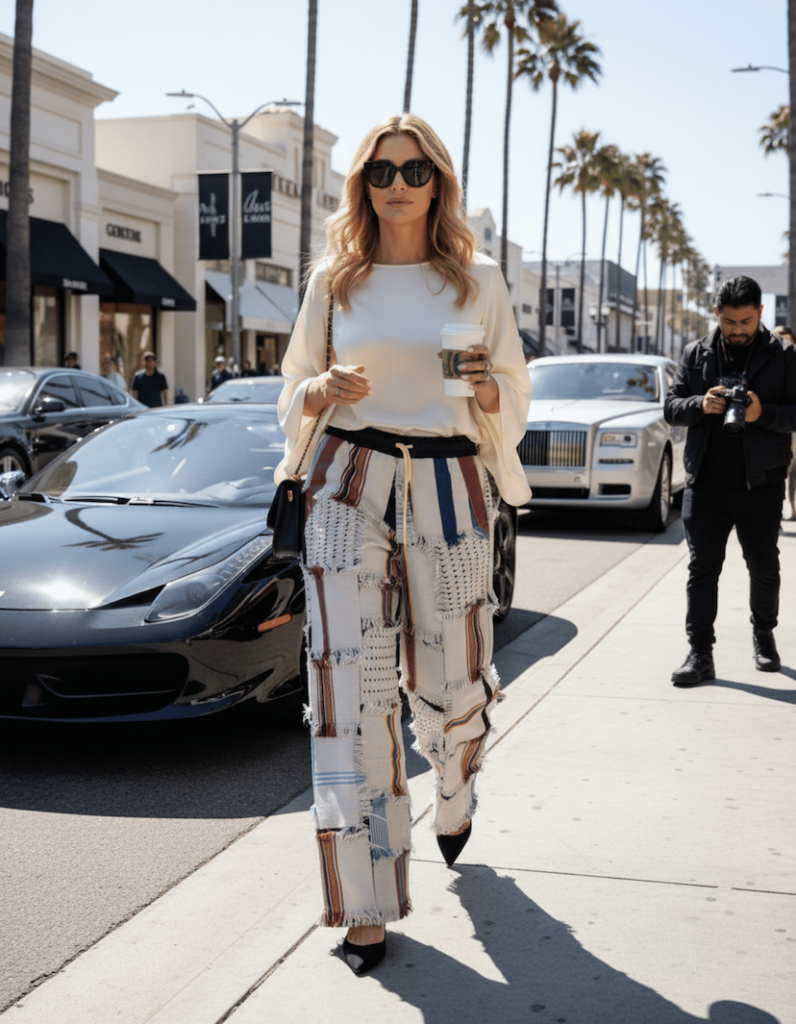
“These pants are storyboards,” Oduwole says. “Each piece reflects my journey over the last 12 years.”
Having visited more than 23 countries for her advocacy work, she noticed two defining elements in every place she encountered. The national flag, and the local fabric traditions. Both are woven, quite literally, into the DNA of OXUDE.
“When you walk wearing them, the flow tells the stories of many nations and cultures intertwined,” she says. “With mission and purpose.”
The experience is meant to be emotional as much as aesthetic. She wants the wearer to feel good about choosing something different. To recognize what she calls “the color of their kindness” and “the beauty of their heart” in identifying with a piece tied to a greater cause.
“And yes,” she adds with a smile, “it does not hurt that you alone have that exact pair.”
In an industry built on replication, Oduwole’s insistence on non-repeatability is radical. But for her, rarity is the essence of luxury.
“Luxury is not money,” she says. “It is the freedom to be your individual self, within a moral compass, and to enjoy peace. That looks different for everyone.”
She recalls the universal childhood experience of showing up somewhere wearing the same outfit as someone else, and the quiet disappointment that follows. “Suddenly, it is not so special,” she says. “Why should that feeling carry into adulthood?”
OXUDE pieces are hand-made, patch by patch, with fabrics that may no longer exist by the time the next piece is created. A blue thread may be replaced by another blue entirely. A new country may emerge, like South Sudan, introducing a new flag pattern. Each pair is numbered and tagged, like limited-edition art.
“You can walk into a luxury store and see $3,000 trousers that are identical down to the last stitch,” she says. “They are made by machines. That is not our philosophy.”
For Oduwole, heritage is not nostalgia. It is living history. “You cannot mass-produce culture,” she says. “It must be handmade. It is storytelling transferred from one generation to another.”
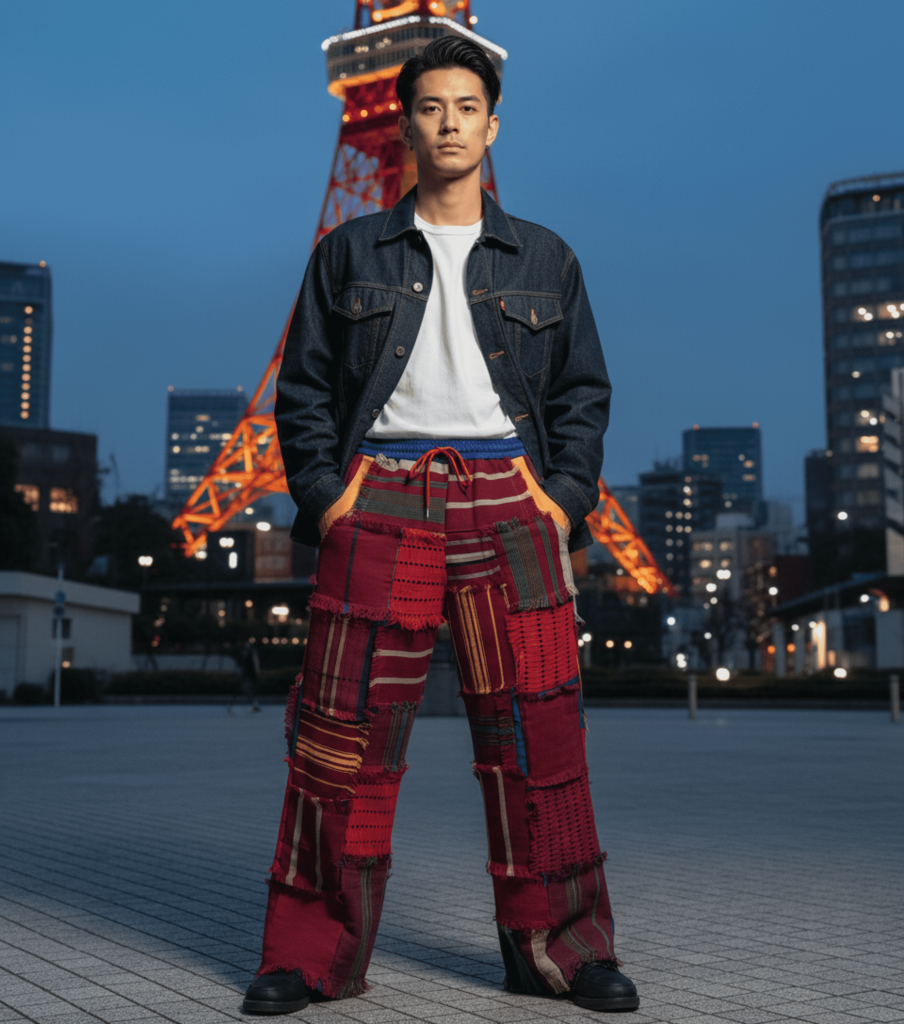
She points to civilizations like ancient Egypt, where dress codes evolved over millennia yet carried consistent cultural meaning. Africa’s 54 countries, each with distinct textile traditions, offered her an endless tapestry of inspiration.
OXUDE’s weaving methods are also a sustainability practice. By supporting traditional craftsmanship, the brand helps keep communities employed and skills alive, while resisting overproduction.
The Middle East and GCC are where OXUDE begins its public journey, and the choice is deeply personal. Oduwole has spent years in the region speaking at leadership and development forums, including engagements in Saudi Arabia and Qatar.
“What resonates with me is the values,” she says. “The warmth of the people, the respect for elders, the modesty of the culture alongside great beauty and opulence.”
She also notes the region’s appreciation for fine accoutrements in everyday life, and its understanding of luxury as something considered, not loud.
“It felt poetic,” she says simply. “The right place to start.”
OXUDE is not Oduwole’s first venture into luxury. The maison quietly launched a fragrance line in late 2025. But the trousers represent something deeper. A culmination.
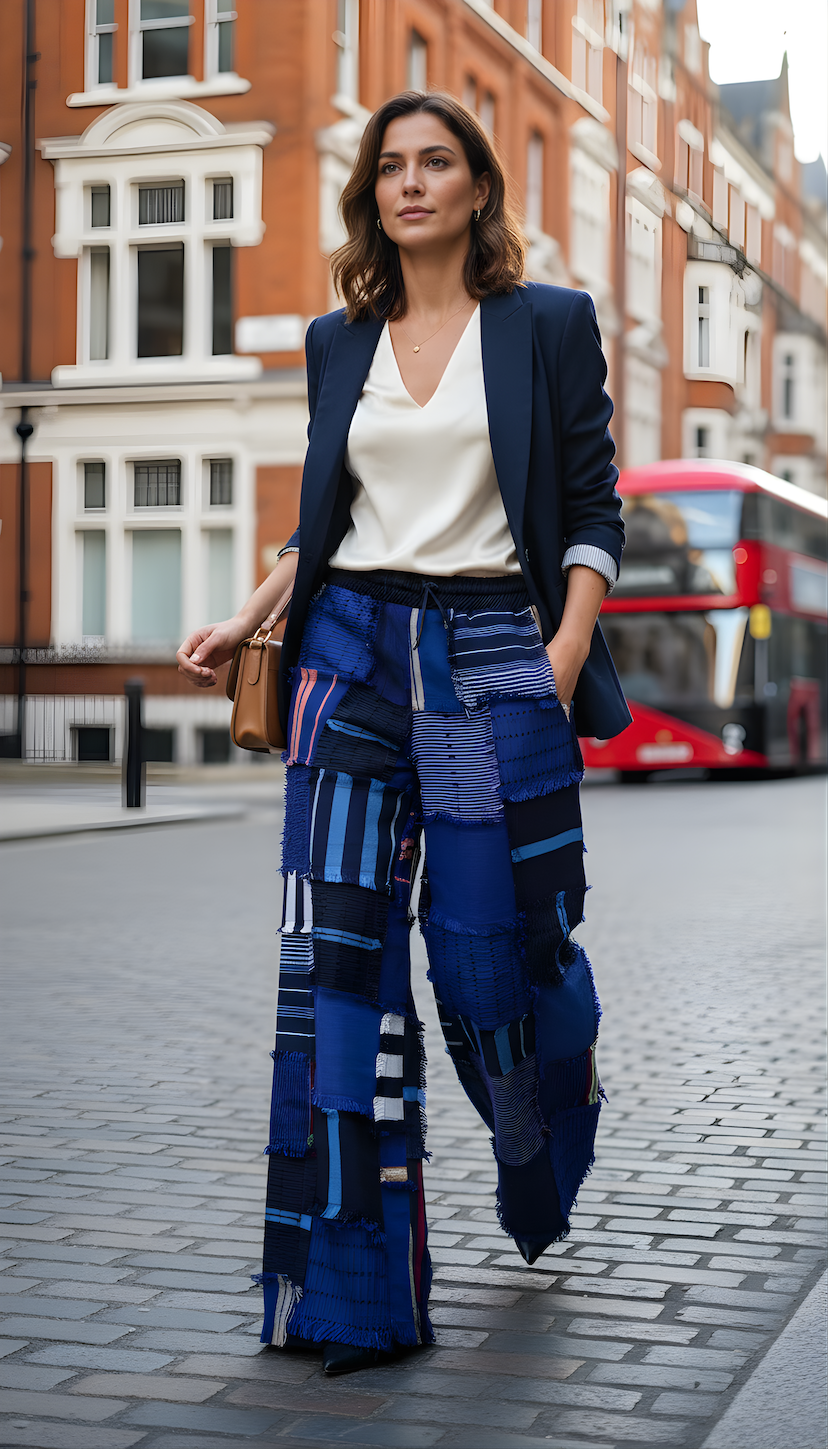
Looking ahead, she envisions OXUDE as both a fashion house and a legacy of purpose-driven artistry. “Creativity has always been behind solutions to many of our problems,” she says. “There is good in all of us.”
Each OXUDE piece funds girls’ education advocacy, transforming ownership into participation. It is luxury with consequence.
For Oduwole, the journey is far from over. She is currently completing her doctoral degree studies, yes at 23, while continuing her global advocacy work and meeting with or advising world leaders, now 36 presidents and prime ministers. But OXUDE marks a turning point, where everything she has learned converges into something tangible.
“This is a lane I am enjoying,” she says. “And there is room on the bus for all of us.”
In OXUDE, fashion does not merely clothe the body. It carries history, purpose, and possibility. True poetry in motion.
For more information visit oxude.com/bespokeclothing.