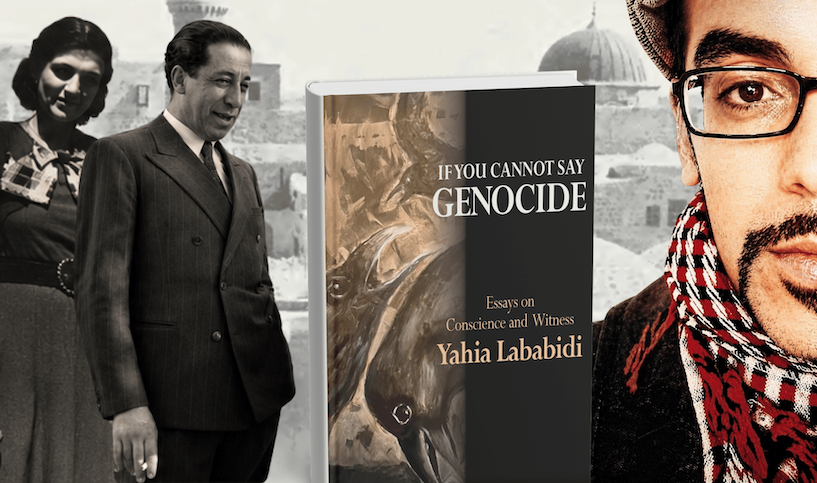
For Yahia Lababidi, the journey from poetry to prose was never part of the plan. The Arab American poet and essayist has spent much of his career exploring faith, exile, identity, and the search for meaning through verse. But as the devastation in Gaza unfolded, poetry no longer felt sufficient. The lyricism that had shaped his work for decades gave way to essays, driven by a need to document, question, and bear witness.
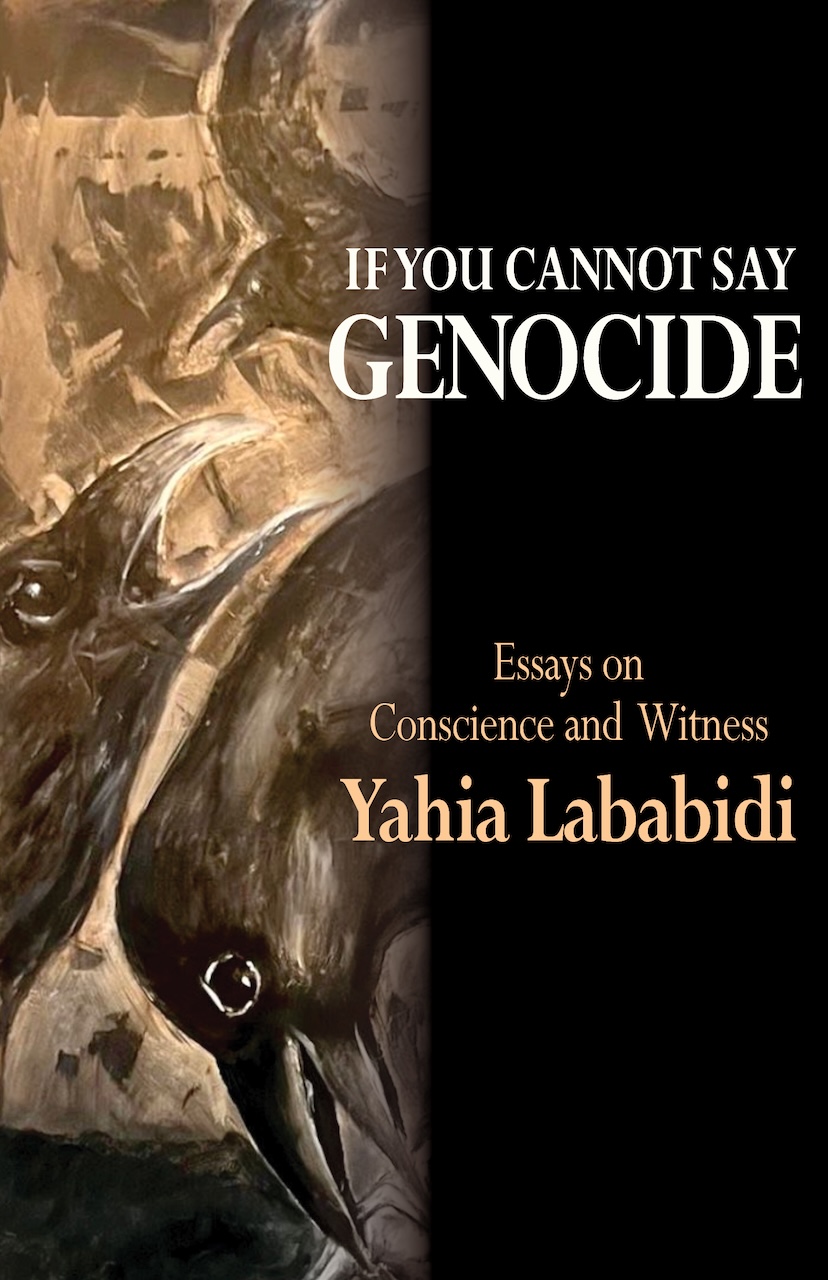
That evolution culminates in If You Cannot Say GENOCIDE: Essays on Conscience and Witness, a collection of 47 essays written between 2023 and 2026 that examine grief, memory, language, and the moral responsibilities of those watching history unfold from afar. The book’s striking cover features I See Birds, an artwork by Palestinian artist Malak Mattar, whose haunting visual language reflects the themes of resilience, humanity, and remembrance woven throughout the collection. Rather than offering political analysis alone, the book asks a deeper question: What happens when conscience refuses to look away?
“It wasn’t a conscious decision,” Lababidi says of the transition. “Something dried up in me after Palestine Wail. I’ve not been able to write poems since. If I cannot sing, I told myself, I must at least faithfully document the unrelenting awfulness of the news.”
For him, prose became the only form capable of carrying the weight of the moment.
“Poetry cries out,” he explains. “Prose asks why the cry goes unheard.”
That distinction lies at the heart of the collection. The essays move fluidly between memoir, philosophy, literary criticism, and cultural reflection, creating a body of work that is as introspective as it is urgent. Rather than documenting events alone, Lababidi examines the language surrounding them, questioning how public discourse determines what is acknowledged, what is forgotten, and what remains unspeakable.
The book’s title is perhaps its most direct statement.
“Naming matters,” he says. “When the words that describe the horrors on the ground are replaced with softer alternatives, something essential is lost.”
For Lababidi, language is never neutral. The words societies choose or refuse to use ultimately shape public memory, political accountability, and collective conscience. To avoid certain words, he argues, is often to soften the reality they describe.
Although the essays were written from the United States, distance never translated into detachment. If anything, Lababidi believes physical separation heightened his sense of responsibility.
“When your home is on fire, you feel the heat halfway across the world,” he says. “Distance does not collapse responsibility. If anything, it increases it.”
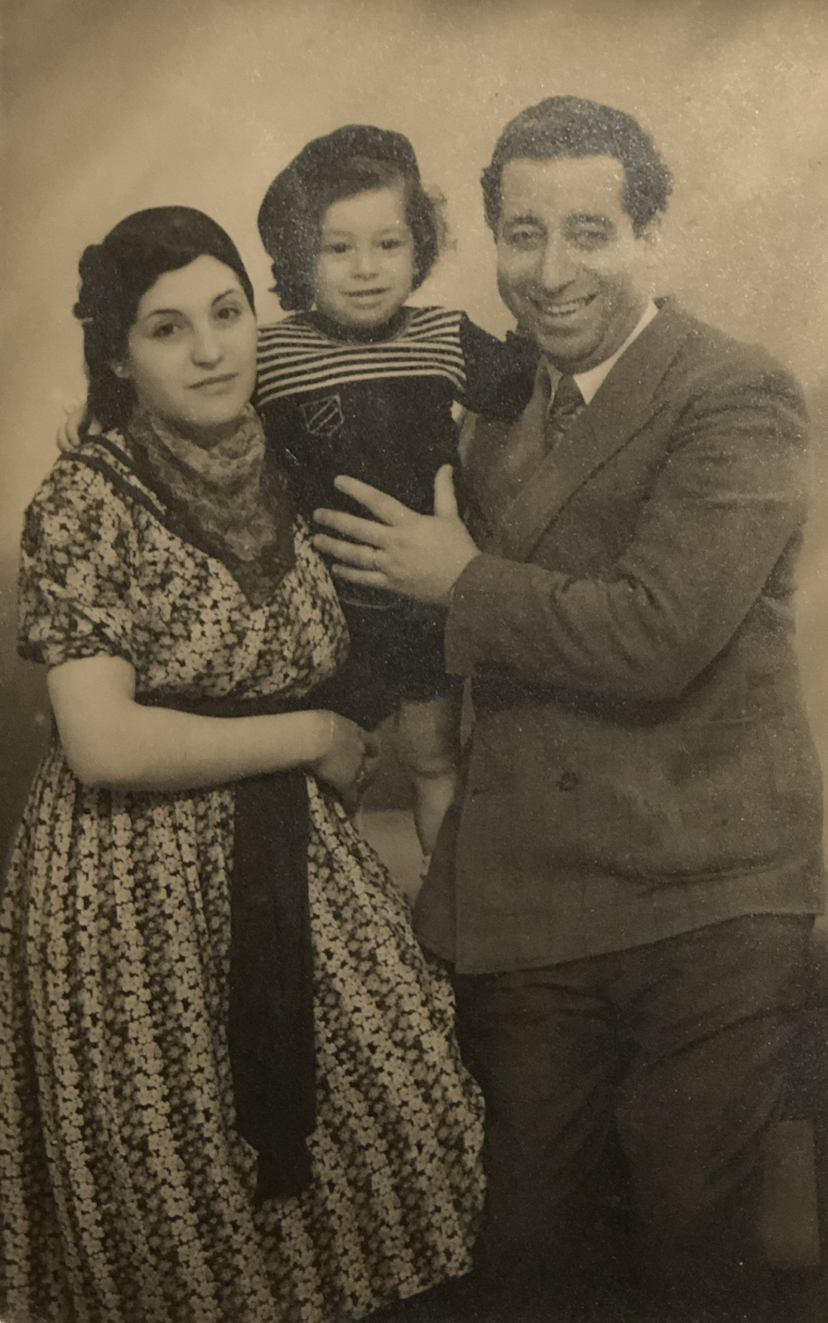
His perspective is informed by multiple identities: an American citizen, an Arab, whose grandparents were Palestinian and a writer whose career has consistently explored questions of belonging and displacement. Those intersecting experiences allow the essays to move beyond immediate events, reflecting instead on what it means to remain ethically engaged in an age saturated with information but often marked by emotional fatigue.
Lababidi’s grandfather, Yahya Lababidi, served as subdirector of Arabic music at Radio Jerusalem, where he worked alongside the poet Ibrahim Tuqan, and famously wrote the lyrics for “Ya Ritni Tir” (يتني طيرر يا) the song that launched Farid al-Atrash’s career as a singer. His grandmother, Rabiha Dajani, later became a pioneering educator in Kuwait, where she founded Jeel Al Jadeed, among the country’s earliest private girls’ schools.
What distinguishes If You Cannot Say GENOCIDE from many contemporary political books is its unwavering belief in literature itself.
Throughout the collection, Lababidi draws on poets, philosophers, novelists, and historians, arguing that literature remains one of humanity’s most powerful tools for preserving dignity in moments of profound loss. Where politics often reduces people to statistics or headlines, art restores complexity.
“Art honors the richness of the human spirit in ways that politics cannot,” he says. “Literature helps breathe warmth and complexity into the caricatures on the news.”
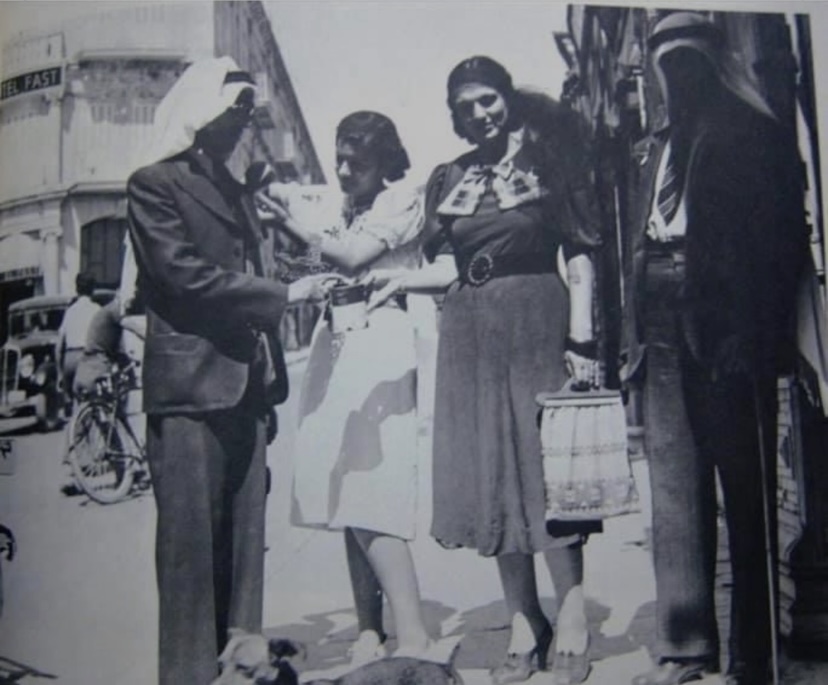
Source: Walid Khalidi: Before Their
Diaspora
It is a philosophy that has shaped his writing throughout his career. If You Cannot Say GENOCIDE marks his sixteenth book, joining a body of work that includes poetry, essays, aphorisms, and reflections translated into more than a dozen languages. His writing has appeared in publications including Liberties, The New Statesman, The Threepenny Review, World Literature Today, and The New Arab, establishing him as a distinctive literary voice whose work often bridges the personal and the philosophical.
The response to the book has reflected that literary positioning. Historians, scholars, and public intellectuals including Peter Beinart, Hamid Dabashi, Sarah Leah Whitson, Ilan Pappé, and Norman Finkelstein have praised the collection for combining moral inquiry with literary craftsmanship, emphasizing its insistence on confronting difficult realities through language rather than looking away.
Yet for Lababidi, the book is ultimately less about persuading readers than inviting them into a shared humanity.
“At the heart of our catastrophes is a crisis of love,” he says. “The world still assigns different values to different human lives.”
He hopes readers leave with a renewed sense of empathy rather than certainty.
“I would hope a sympathetic reader might be moved toward greater pity and mercy,” he says, “and toward the sobering recognition that, but for the grace of God, it might have been them, or their own children.”
Even those approaching the book with skepticism, he believes, deserve an invitation rather than a condemnation.
“All I ask is that they remain open long enough to recognize the person writing,” he says. “Someone who loves literature and prays, who carries a family history, and who arrived at these conclusions honestly.”
In an era increasingly defined by polarization, If You Cannot Say GENOCIDE offers neither easy answers nor ideological certainty. Instead, it asks readers to consider the relationship between language and responsibility, and whether bearing witness begins with something as simple, and as difficult, as refusing silence.
For Lababidi, literature has always been a search for truth. This time, it became an act of conscience.
If You Cannot Say GENOCIDE: Essays on Conscience and Witness is published by New Village Press, distributed by NYU Press, and will be available October 6, 2026. You can find Yahia on Instagram: @yahialababidi