
Summer holidays are a gift until the inevitable words arrive: “I’m bored.” While it’s tempting to hand over a tablet or plan an expensive outing, childhood experts suggest that boredom isn’t something to eliminate entirely. In fact, it can be the starting point for creativity.
Psychologist Dr. Teresa Belton, who has researched boredom and creativity, argues that periods of unstructured time encourage children to develop imagination, problem-solving skills, and independence. The key is offering a spark rather than a fully planned activity.
Here are five fun, completely free ways to turn an ordinary afternoon into an adventure.
Build an Indoor Obstacle Course
Gather cushions, chairs, blankets, masking tape, and anything else that’s already around the house. Create tunnels to crawl through, balance lines on the floor, jumping stations, or “lava” that can only be crossed using cushions.
The best part? Let your children design the course themselves after the first round. Planning the challenge often takes longer than completing it, keeping them entertained while encouraging creativity, spatial thinking, and teamwork.
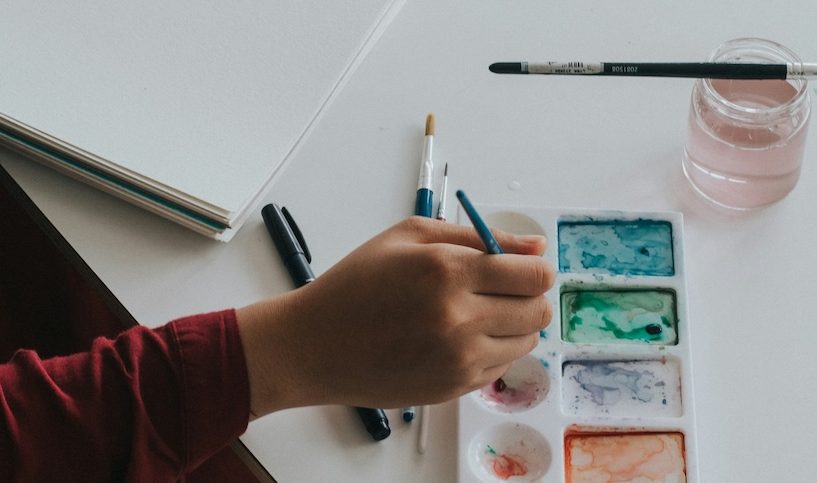
Create a Family Art Gallery
Instead of asking children to simply draw, give them a mission. Create artwork around a theme such as “My Dream Vacation,” “Under the Sea,” or “Invent a New Animal.”
Display every masterpiece around the house like a real gallery. Make simple labels with the artist’s name and title, then spend ten minutes “touring” the exhibition together.
Children often become far more invested when their creations are celebrated rather than simply placed on the refrigerator.
Go on a Nature Treasure Hunt
You don’t need a forest or a park to explore nature. A garden, apartment courtyard, or neighborhood street works just as well.
Create a simple list of things to find: something smooth, something rough, a feather, a flower, a heart-shaped leaf, an interesting rock, or something that smells nice.
The goal isn’t collecting everything, but encouraging children to slow down and really observe the world around them.
Become Kitchen Scientists
The kitchen is full of simple science experiments.
See whether different objects float or sink. Mix baking soda and vinegar if you already have them. Freeze small toys inside ice cubes and challenge children to “rescue” them using warm water and spoons. Experiment with what dissolves in water and what doesn’t.
The activity feels like play while naturally introducing observation, prediction, and experimentation.
Put on a Living Room Talent Show
Encourage everyone in the family to prepare a short performance. It could be singing, dancing, telling jokes, magic tricks, poetry, storytelling, or even teaching a new skill.
Create homemade tickets, assign someone as the host, and applaud every performance. Younger children especially love having an audience, and preparing their act builds confidence as well as communication skills.
Let Boredom Do Some of the Work
Perhaps the most valuable activity is doing…nothing.
It may sound counterintuitive, but experts suggest that children don’t need every minute scheduled. After the initial complaints, many begin inventing games, building imaginary worlds, or finding projects of their own. Those moments of self-directed play build resilience, independence, and creativity in ways structured entertainment often cannot.
This summer, resist the pressure to fill every hour. Sometimes all children need is a little inspiration, a little space, and permission to be wonderfully bored before their imagination takes over.
Photo by Rifqi Ali Ridho on Unsplash