
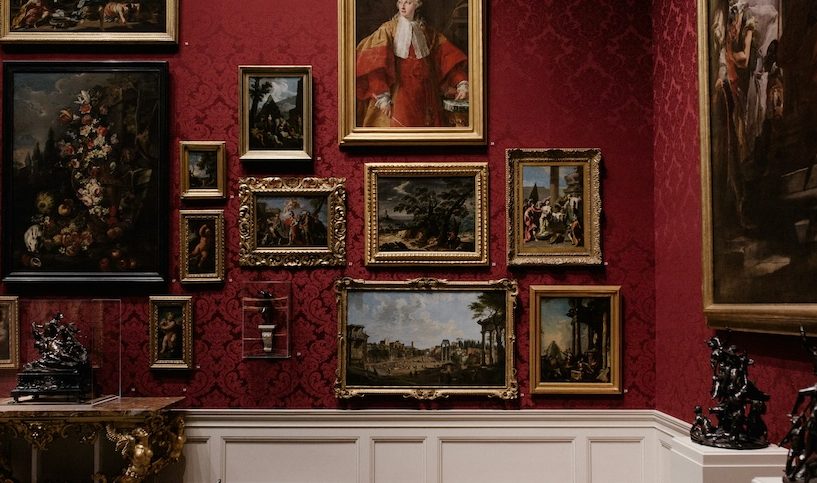
Art history can sound intimidating. The names are unfamiliar, the dates seem endless, and somewhere along the way you may have been made to feel that appreciating art requires an advanced degree and the ability to casually identify a Renaissance painting from across a crowded room.
It does not.
You do not need to memorize every artist who ever lived. You do not need to know the difference between every school of modernism. And you certainly do not need to pretend to understand a painting you do not like.
But knowing a little art history can make the world considerably more interesting.
IT TEACHES YOU HOW TO LOOK
We spend an extraordinary amount of time looking without really seeing. We scroll through images, move through buildings, browse stores and encounter advertisements almost constantly, but rarely stop to consider why something looks the way it does.
Art history gives you a vocabulary for paying attention.
Once you understand that artists make deliberate choices about composition, color, scale, light, materials and perspective, you begin noticing those choices everywhere. A room, a photograph, a fashion collection or even an advertising campaign can suddenly become something worth examining rather than simply consuming.
You are not just looking anymore. You are asking why.
IT EXPLAINS THE WORLD THAT CAME BEFORE US
Art does not exist in isolation. It reflects the societies that produced it.
Religious paintings can tell us about belief and power. Portraits can reveal ideas about status and identity. Architecture can reflect technological developments, political ambitions or changing social structures. Even the materials artists use can tell us something about what was available and valued at a particular moment.
Learning the context behind a work can completely change the way you experience it.
A painting stops being an old object hanging on a wall and becomes evidence of how someone, somewhere, once understood their world.
IT MAKES MUSEUMS MORE FUN
Walking into a museum without any context can sometimes feel like being dropped into the middle of a conversation.
You can appreciate what you see, but you may not know what you are supposed to be looking for.
A little art history gives you points of entry. You start recognizing recurring ideas, techniques and influences. You notice when one artist is responding to another or when a movement is deliberately rejecting what came before it.
You do not have to understand everything. You simply have more questions to ask.
And questions are usually much more interesting than memorized answers.
IT HELPS YOU UNDERSTAND MODERN CULTURE
Art history is not confined to museums.
Ideas developed by artists continue to influence graphic design, photography, fashion, interiors, film, advertising and popular culture. Contemporary designers regularly borrow, reinterpret and challenge visual languages that have existed for decades or centuries.
Understanding where those ideas came from makes contemporary culture easier to decode.
That dramatic minimalism you love? It has a history. The decorative maximalism currently filling your social feeds? It has a history too. Even the desire to reject established aesthetics is part of a much longer cycle of artistic rebellion.
Trends rarely appear from nowhere.
IT HELPS YOU DEVELOP YOUR OWN TASTE
Perhaps the best reason to learn art history is that it makes it easier to form an opinion.
You may discover that you love Baroque drama but cannot stand minimalism. You might be fascinated by conceptual art or completely unmoved by it. You might adore an artist whose work everyone else seems to find boring.
That is fine.
The point is not to learn what you are supposed to like. It is to understand what you respond to and why.
Taste becomes more interesting when it is informed by curiosity rather than simply dictated by whatever happens to be fashionable.
You can start anywhere. Pick an artist whose work you already like. Visit a museum and read the descriptions instead of walking past them. Watch a documentary. Learn the broad outlines of a few major movements.
You do not need to become an art historian.
You just need to become a more curious observer.
Because once you start understanding how artists have looked at the world, you may find yourself looking at your own world a little differently too.
Photo by Andrew Neel on Unsplash.