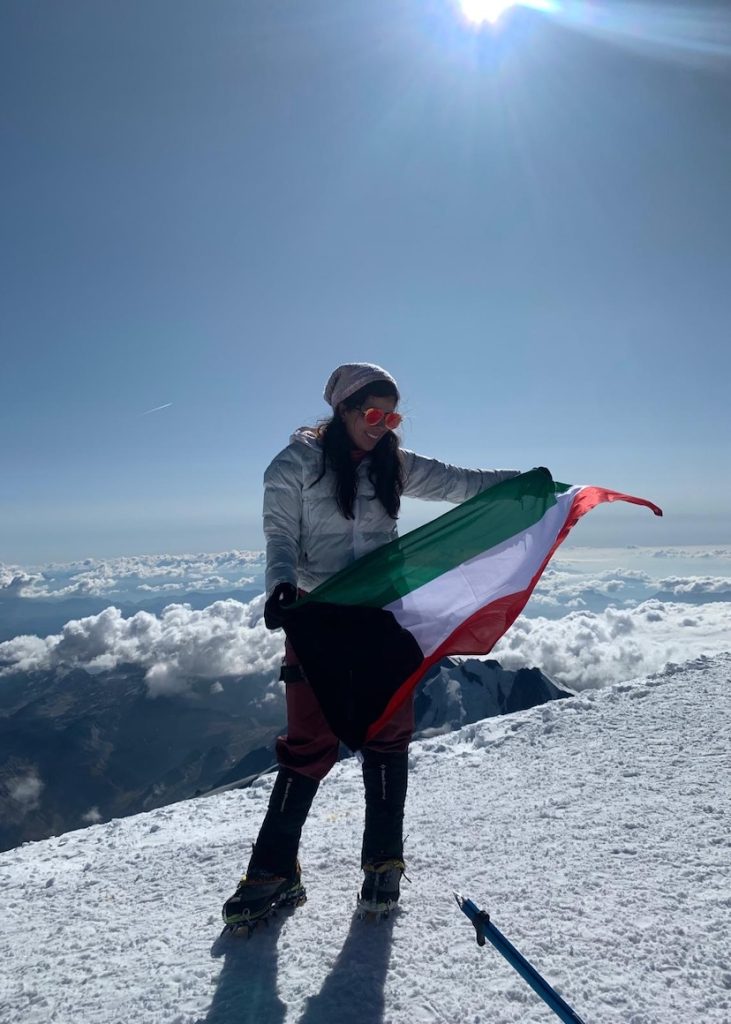
There is a particular kind of quiet that settles over you when you are high in the mountains. The world narrows to the ground beneath your feet, the rhythm of your breathing and the person moving beside you. For Rand AlSumait, that sense of focus became one of the most memorable parts of climbing Mont Blanc.
“I remember how quiet and focused everything becomes once you’re actually climbing,” she says. “Your world suddenly becomes very small. You’re watching where you place your feet, listening to your breathing and concentrating on the next few metres rather than thinking about how far you still have to go.”
For someone who has spent years travelling, trekking and working in the adventure travel world, the climb represented a natural progression. Rand had already become comfortable in the mountains, but Mont Blanc offered something different. It was not simply another trek, but an opportunity to become a beginner again.
“I wanted to experience something that would take me beyond the kind of mountains I was already comfortable with,” she explains. “Mont Blanc felt like that natural next step.”
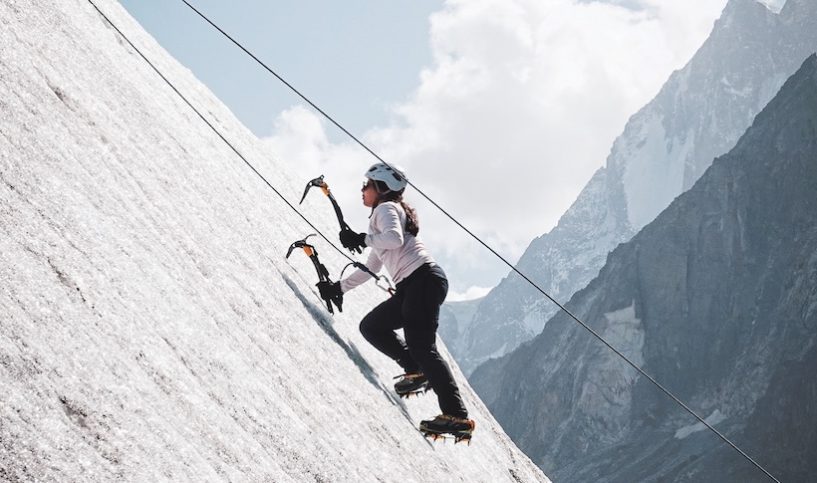
What drew her to the experience was its technical nature. Unlike a traditional trek, climbing Mont Blanc meant learning to use crampons and an ice axe, moving across glaciers and travelling as part of a rope team. There was altitude, unfamiliar terrain and the need to remain constantly engaged with what was happening around her.
“I liked the idea of putting myself in a situation where I would have to learn again and become a beginner in some ways,” she says.
That distinction is important. While Mont Blanc can appear deceptively accessible in photographs, the reality involves considerably more than simply being fit enough to walk uphill. Life Happens Outdoors, the adventure company behind Rand’s trip, runs an eight-day programme comprising six guided mountain days. Participants begin by learning essential mountaineering skills before progressing through Alpine terrain while acclimatising to the environment. The final phase allows three days for the approach to Mont Blanc, a possible summit attempt and the descent, with a maximum of two participants per IFMGA-certified mountain guide. Whether the summit attempt goes ahead depends on the participants, the weather and the mountain conditions.
For Rand, the biggest surprise was that endurance was only one part of the challenge. “I imagined the biggest challenge would be endurance, when in reality there were so many other elements happening at once,” she says. “You’re thinking about your steps, the conditions, your equipment, the person you’re roped to, the pace and your own energy. It requires constant concentration.”
That concentration is something LHO founder and CEO Rami Rasamny considers central to mountaineering. The company recommends that participants allow roughly four to six months to prepare, depending on their starting point, building endurance and strength while gradually increasing the amount of time they spend on their feet. Training needs to prepare participants not only to climb, but to descend with control, carry a pack and repeat the effort over consecutive days.
Much of that preparation can happen in Kuwait. Stairs, incline treadmills, strength training and regular walking can all form part of the foundation, while actual mountain days help participants develop their footing, pacing and familiarity with their equipment. Boots, clothing and packs also need to be tested before departure rather than introduced for the first time on the mountain.
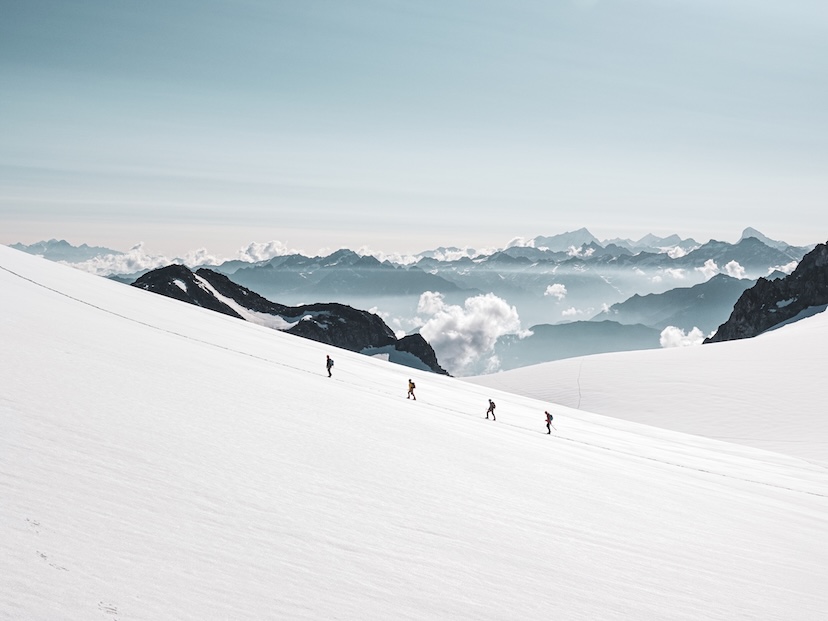
For Rand, preparation meant focusing heavily on endurance and strength, with incline walking, cardiovascular work and training for her legs and core. But she also recognised that there was a mental element that could not be recreated in a gym.
“You have to become comfortable with discomfort,” she says. “There will be moments when you’re cold, tired, nervous or simply wondering why you voluntarily signed up for this.”
The uncertainty was perhaps the hardest part. Training can make you stronger, but it cannot eliminate variables such as altitude, weather and mountain conditions. For Rand, being ready eventually came to mean something different from feeling completely confident.
“Being ready didn’t mean feeling completely fearless or certain that I would succeed,” she says. “It meant knowing that I had prepared as well as I could and trusting myself enough to show up and try.”
That mindset is one LHO believes is just as important as physical fitness. The company describes Mont Blanc as a serious mountain, with long days, exposed terrain, altitude and changing conditions. Mental preparation involves staying attentive when tired, communicating when something feels wrong, accepting instruction and being willing to change plans.
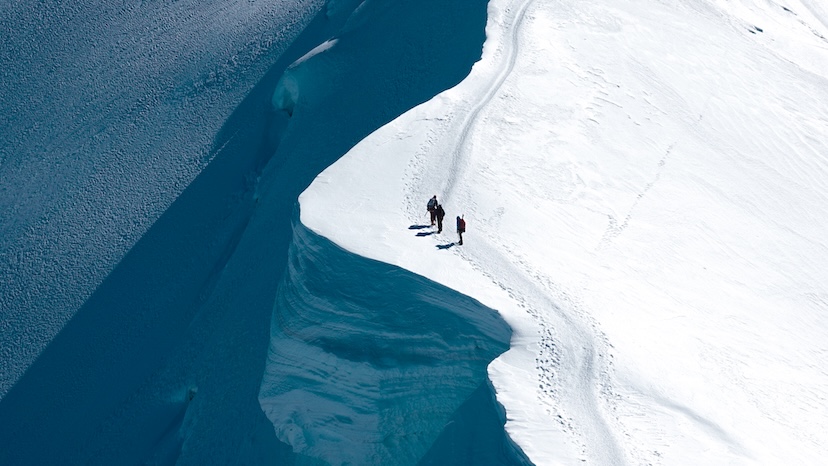
Perhaps most importantly, that includes understanding that reaching the summit is not the only measure of a successful expedition. Knowing when to turn around can be just as important as knowing when to continue.
For Rand, the experience also carried a wider significance. She was part of a group of four women from Kuwait, the UAE and Lebanon, and found something particularly meaningful in sharing such a demanding environment with women from the region.
“There was something powerful about being women standing together in an environment that was so far removed from our everyday lives,” she says.
The group supported one another throughout the climb, with each woman experiencing moments of strength and difficulty at different times. Rand also appreciated what their presence represented.
“None of us needed to prove anything, but there was still something meaningful about seeing women from the Arab world choosing to put themselves in such a challenging environment simply because we wanted to see what we were capable of.”
Women from the Gulf and wider region are part of LHO’s community, both as participants and as leaders. Rand herself is a particularly fitting example of that progression. According to Rasamny, she joined an LHO Mont Blanc climb in 2019 and later became one of the company’s team leaders. For LHO, stories like hers can help make an unfamiliar experience feel more accessible to someone considering their first adventure.
That sense of possibility is at the heart of why Rasamny founded the company in the first place. His own relationship with the outdoors began as part of a personal decision to change his lifestyle. He wanted LHO to provide a welcoming entry point for people who were interested in adventure but did not know how to begin, from understanding equipment and training to finding a community in which they felt comfortable asking questions.
Today, the community includes first-time participants alongside people returning for their fifth or seventh adventure. Some have even progressed from joining trips to becoming team leaders themselves.
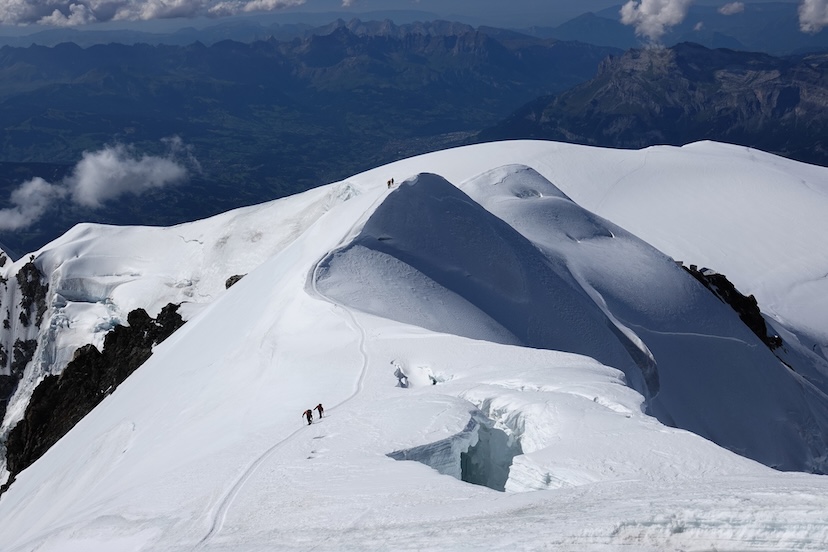
For Rand, though, the most lasting lesson from Mont Blanc was not about becoming an accomplished mountaineer. It was about what happens when you allow yourself to attempt something before you are completely certain you can do it.
“Confidence doesn’t always come before doing something difficult,” she says. “Sometimes you have to step into something while still having doubts, and the confidence comes afterwards when you realise you handled situations you weren’t completely sure you could handle.”
The experience also shifted the way she thinks about adventure itself. The more time she spends in the mountains, she says, the less she feels the need to conquer anything.
“Mountains are much bigger than us,” she says. “For me, adventure has become less about collecting summits and more about the experiences, the people, the lessons and the version of yourself you discover along the way.”
And for anyone watching from Kuwait and wondering whether an experience like Mont Blanc is possible, her advice is refreshingly simple: do not decide what you are capable of before you have given yourself the chance to find out.
“Start small. Train properly. Learn the skills. Surround yourself with experienced people and slowly build confidence through experience.”
Because sometimes the most important part of an adventure is not standing on the summit. It is deciding to take the first step towards it.
If you’re ready to go on your own adventure, visit lifehappensoutdoors.com.