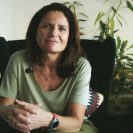
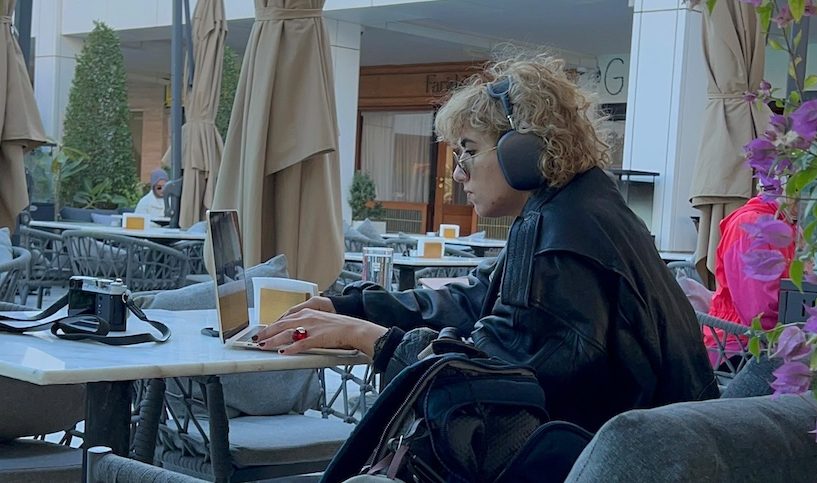
When Hawraa Khalfan introduces herself, it’s with a simplicity that belies the depth of her work. “I’m Hawraa, a writer,” she says. Yet behind those four words lies a decade of creative evolution, personal growth, and an unwavering dedication to Kuwait’s artistic community.
We first spoke to Hawraa in 2016 about running the Kuwait Writing Club, a local initiative to bring writers together. Since then, her journey has taken her from hosting intimate creative meetups to shaping the artistic programming of one of Kuwait’s most dynamic cultural spaces, ARTSCENE ME.
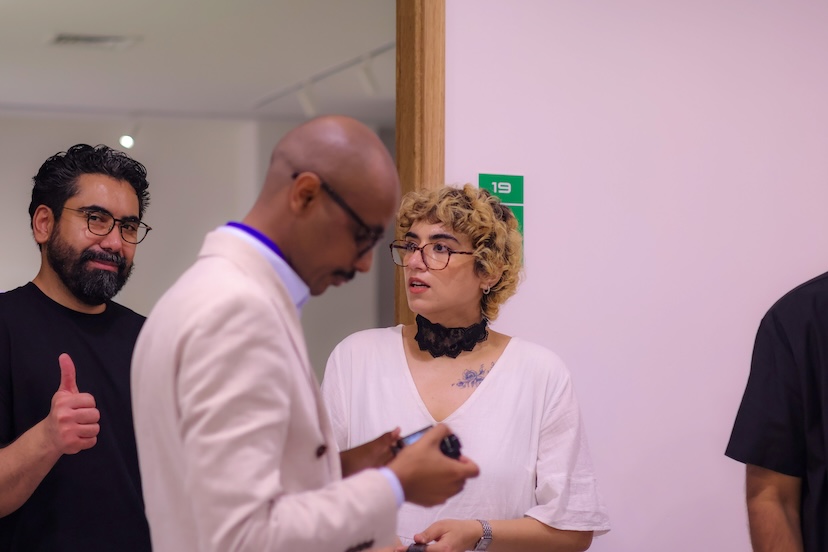
“Circumstance forced me to take a break from organizing creative community meetups and focus on my craft,” she reflects. “That’s when I discovered parts of myself I didn’t know existed.” The shift, as she describes it, was almost inevitable. The founder of ARTSCENE ME, Areej Saleh, was once a member of the Kuwait Writing Club. When the organization set out to create a Writing Circle, Areej knew Hawraa was the right person to bring it to life.
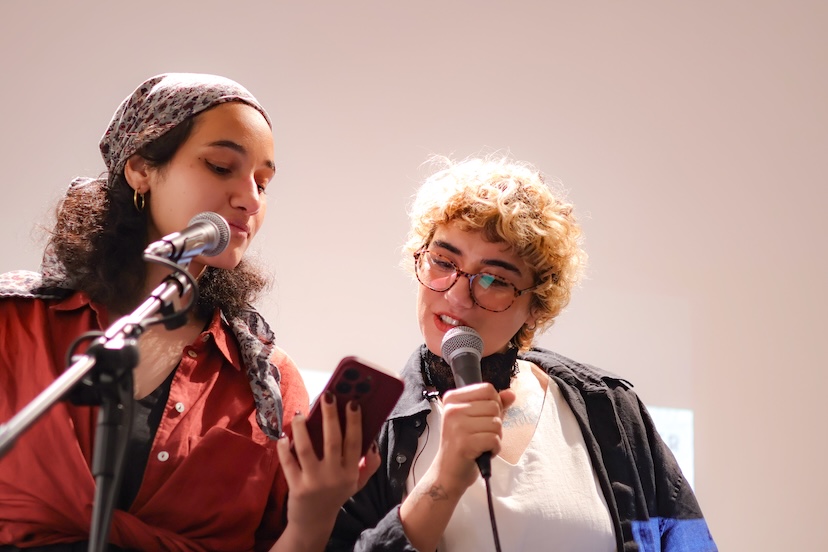
Since joining ARTSCENE ME, Hawraa has stepped into managerial and administrative roles as Community Manager and business partner. She now runs the creative community’s programming; from open mics and writing circles to workshops and residencies across multiple disciplines. What began as a love for writing has transformed into a passion for supporting musicians, visual artists, and stand-up comedians in Kuwait.
“ARTSCENE ME gave me back something I thought I lost with the retirement of the Kuwait Writing Club,” she says. “It gave me community, support, and friendships with creatives. Areej inspires me in a way that’s rare for me to say about someone in their twenties. Her resilience, transparency, and determination to build a network of support for artists are mountain peaks I hope to visit one day.”
Hawraa’s work is deeply shaped by her personal life, especially her roles as mother and partner to music producer Yousef Alkusaimi. “When I write romantic love, it’s about Yousef, my partner. He’s every kind man I think up, every loving husband I create,” she says, describing his constant, behind-the-scenes support, from pointing out cameras she’s trying to avoid to volunteering as the sound engineer for her Chapter Three Literary Nights.
When she creates fictional mothers, she draws from her own mother, Awatif, whose resilience through disability left an enduring imprint. “Even on life support, her smile and the blinks of her eyes were how she sent me love. I find her in everything I write.” Motherhood, too, takes on specific faces in her stories: Tala’s curiosity and fire, Shaheen’s compassion and restlessness. “If a creative does not live a dynamic life of loss, love, pain, boredom, and so on, what do they have to write about?” she asks.
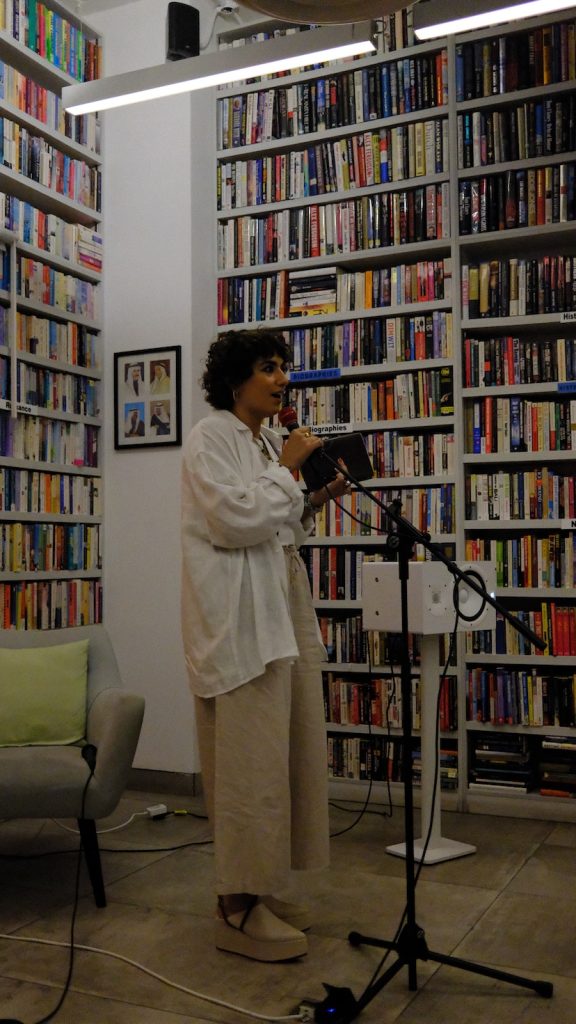
One of the most defining intersections between Hawraa’s personal and creative lives came when she took a two-year leave from her job, determined to write a book. The first year vanished into the demands of parenting two young children in the US. “Thinking back, how did I expect to breastfeed, manage family calendars, cook and clean, write, read, and still rest every day?” she says with a smile.
The second year, she enrolled her youngest in nursery and committed to writing daily. “I am my mother’s daughter, so nothing, not even my own negative voice, could convince me I couldn’t do something.” What followed was a cycle of writing, deleting, and reading, all while juggling school pick-ups, laundry, and lunchboxes. “The life of a creative mother is hard. We thrive in immersion, but immersion was not a privilege I had.”
Out of this persistence came her debut novel, Still Born a Woman, centered on protagonist Zainab. “I knew I wanted to write about the weaponization of love and the consequences that follow,” she explains. As the characters and world took shape, more themes emerged: motherhood, beauty, kindness, friendship, self- love, and mistakes.
While many readers assume the protagonist mirrors the author, Hawraa notes the distinction. “I can’t help but pull from my own experiences, but that doesn’t mean every protagonist is me in disguise. Zainab’s yearning to escape is something I lived with as a young woman, for example.”
Her decision to set the novel in a dystopian world allowed her to explore the impact of customs and societal norms on women’s inner worlds. “Through the writing process, I realized how much more complicated it really is. How radical I may seem to some, when in reality, all I want to do is tell girls and women that it’s okay, you’re not alone, we’ve all felt that way too.”
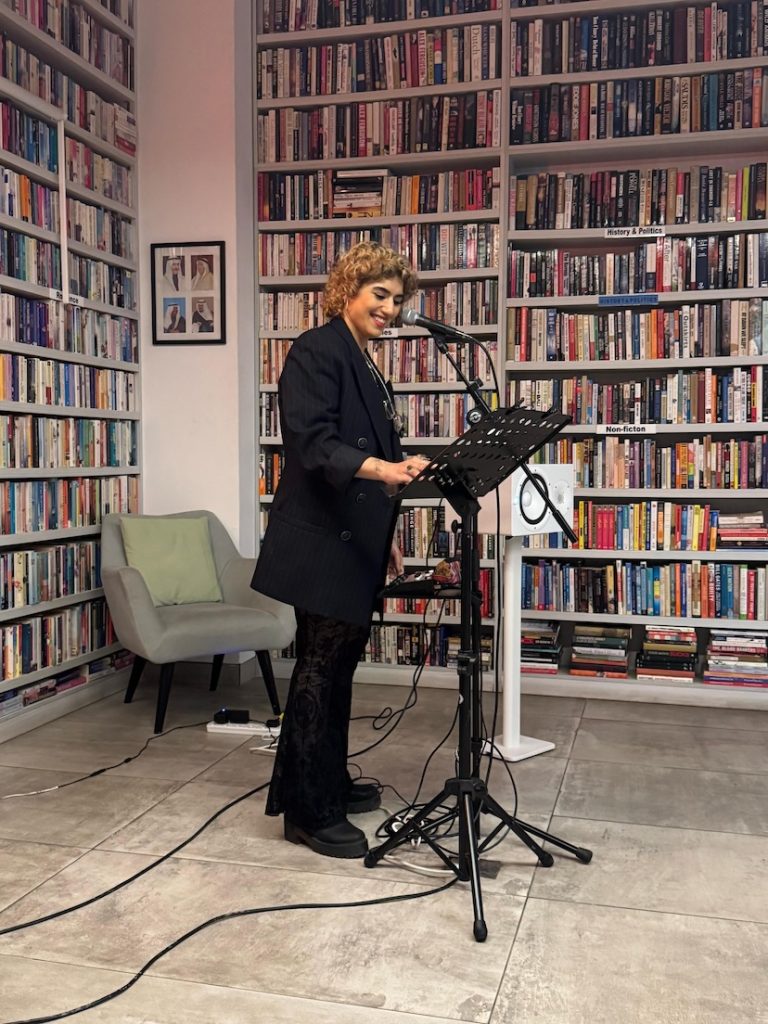
When asked about legacy, Hawraa’s answer is striking in its humility. “I don’t write for legacy. I write so no young girl feels isolated and alone.
So, no teenage girl forces herself to stop crying to make sure she locked her bedroom door because she wouldn’t want to hurt her family with her tears.”
If someone were to tell her daughter one day that her mother’s work helped them through a dark time, that would be success. If her children never felt they had to mute their creative yearning, that would be the mark of a good role model. “I urge every Arab woman with a creative passion to unleash herself. Our voices are our legacies.”
Hawraa’s compost pile of story ideas is far from empty. She is currently developing two novels side by side, one a sequel to Still Born a Woman, the other inspired by a personal experience from earlier this year. Details remain under wraps for now, but as she notes, “If you’re a storyteller, you know the story takes the lead sometimes.”
From the girl who started our running and hosting a writing club to the woman shaping Kuwait’s creative landscape, Hawraa Khalfan’s story is one of resilience, reinvention, and a commitment to making sure women’s voices are not just heard but deeply felt.
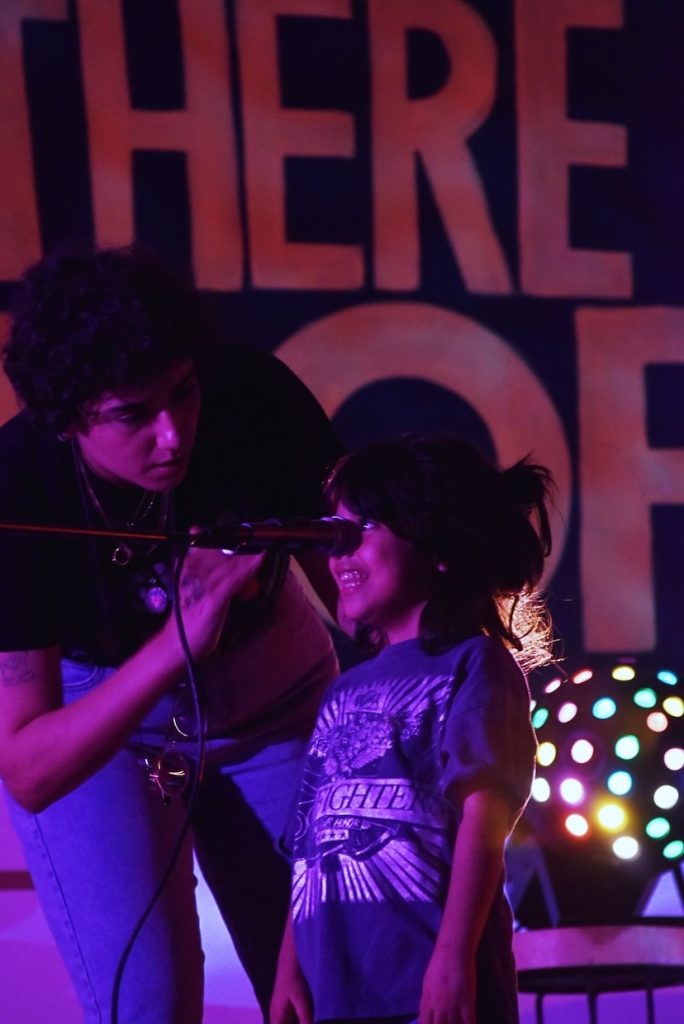
UP CLOSE & PERSONAL QUESTIONNAIRE
What do you most value about your friends?
Compassion, loyalty, love.
Which living person do you most admire?
There’s two of them; my kids.
What is your idea of perfect happiness?
Happiness doesn’t exist so my idea on happiness is that it’s a western construct.
What is your greatest extravagance?
Time.
What is your most treasured possession?
A mug my mom made while I was bel rawtha (KG). On one side, it has my picture in my school uniform and on the other it says ‘I love you’. I keep it on my desk.
What is your greatest fear?
Losing my voice.
What is your most marked characteristic?
I don’t know how to write without telling the truth.
Which talent would you most like to have?
Singing.
What is one trait you have that you are most grateful for?
Determined and oblivious to the haters.
What is the human trait you most dislike about others?
Greed.
What is it that you most dislike?
Being interrupted while I write.
Which words or phrases do you most overuse?
“like” for comparisons. To a point I’m annoying myself.
What are your favorite words to live by?
6aybah, Khalooqah, Mu7tarama. When my mother’s MS gave her dementia, she would mostly repeat these three words to everyone she spoke to. I choose to live by them today.
Where would you most like to live?
Now’s a great time to be alive.
If you could have any job, what would it be?
I have my dream job already, I’m a writer.
What would you consider your greatest achievement?
Creating gentle, respectful, creative and balanced adults out of my children.
What do you hope for the future?
Writing success, so I can write full time, so I can write all the stories I have in me.
Want to follow Hawraa’s writing adventures? Follow @hawraawrites on Instagram.