
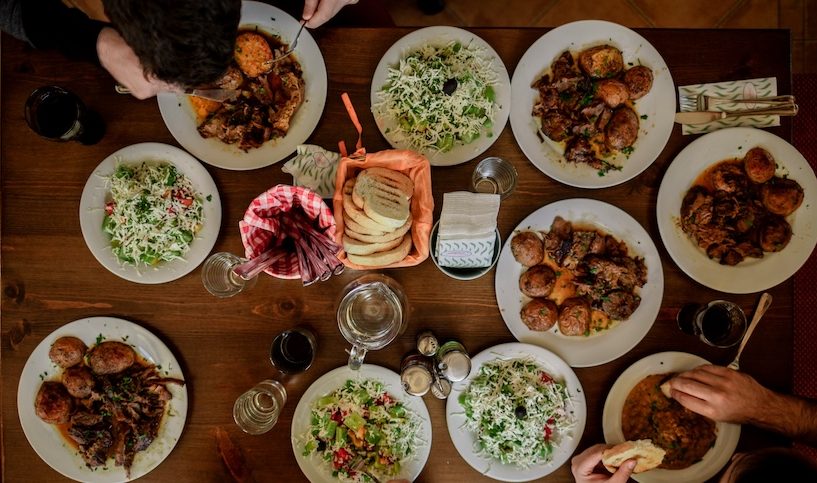
Hosting has quietly become one of the most stressful social roles. Somewhere between curated tablescapes and perfectly timed menus, the simple act of inviting people over has turned into a performance. But good hosting was never meant to exhaust the host. At its best, it creates ease, not pressure, and connection, not comparison.
The truth is that most guests are not remembering the exact menu or the symmetry of the table. They remember how they felt in the space. As Maya Angelou famously said, “People will never forget how you made them feel.” That insight applies as much to hosting as it does to life.
WHY HOSTING FEELS HARDER THAN IT USED TO
Modern hosting carries invisible expectations. Social media has collapsed the line between private gatherings and public presentation, and many hosts feel compelled to deliver an “occasion” rather than an evening. Add busy schedules, work fatigue, and family responsibilities, and hosting can feel like another job instead of a joy.
Burnout often comes from trying to control every variable. When the focus shifts from welcoming people to managing outcomes, tension follows. Food must be perfect. The house must be spotless. Timing must be precise. The problem is not hosting itself, but the pressure layered on top of it.
REFRAMING THE ROLE OF THE HOST
At its core, hosting is about stewardship, not spectacle. A good host sets the tone, then lets the evening unfold. This means redefining success. A successful gathering is one where conversation flows, people feel comfortable, and no one feels rushed or judged, including the host.
One of the most effective mindset shifts is deciding in advance what matters and what does not. Warm food matters. Clean bathrooms matter. Emotional presence matters. Perfect plating, matching glassware, and elaborate menus often do not.
SIMPLICITY AS A STRATEGY
Low-effort hosting is not careless hosting. It is intentional simplicity. Cooking one main dish well is more generous than offering five things done halfway. A table set with care but without excess feels welcoming rather than formal. Repetition is not laziness; it is consistency.
Many seasoned hosts quietly rely on a small rotation of “always works” menus. This reduces decision fatigue and allows confidence to replace stress. Familiarity frees attention, making room for conversation instead of constant checking and adjusting.
TIME BOUNDARIES PROTECT ENERGY
One of the most overlooked hosting tools is a clear time frame. Open-ended invitations can feel generous, but they often leave hosts depleted. Setting a natural beginning and end, even if it is loosely framed, creates structure without rigidity.
An afternoon coffee, an early dinner, or a weekday gathering with a clear finish respects both host and guests. People arrive more present when they know the rhythm of the event, and hosts can relax knowing the evening has a shape.
FOOD THAT WORKS WITH YOU
Food should support the gathering, not dominate it. Dishes that can be prepared in advance, served at room temperature, or finished quickly allow the host to stay engaged rather than stuck in the kitchen. Shared platters encourage ease and remove the pressure of perfect portions.
Importantly, guests do not need variety to feel cared for. They need enough, and they need it served with calm. A simple meal offered with confidence feels abundant.
LETTING GO OF PERFECTION
Perfectionism is the fastest path to hosting fatigue. Homes are lived in. Conversations are imperfect. Moments spill and overlap. That messiness is part of what makes gatherings human.
Guests often feel more relaxed when the environment does not feel staged. A space that feels real invites people to exhale. When the host allows small imperfections, everyone else follows.
CONNECTION OVER IMPRESSION
The most memorable hosts are not the most elaborate ones. They are the ones who listen, who notice when someone needs another drink, who create space for different personalities to coexist comfortably. Presence is the most valuable offering a host can give.
This is where hosting becomes less about skill and more about attention. When the host is grounded, the room settles. When the host is anxious, the room tightens. Energy travels quickly.
A FINAL WORD
Hosting does not need to be frequent to be meaningful. A few well-paced gatherings a year can nourish relationships more than constant overextension. Choosing when and how to host is an act of self-respect, not withdrawal.
At its heart, hosting is an invitation, not a performance. When done with intention and ease, it becomes a shared experience rather than a solo effort. And when the host feels cared for, the gathering almost always takes care of itself.
Photo by Stefan Vladimirov on Unsplash.