
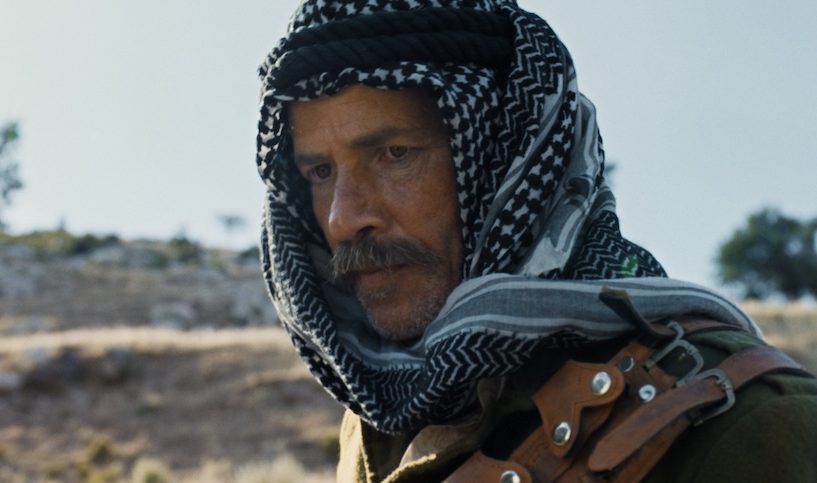
For Azzam Fakhreddin, involvement in the feature film Palestine 36 is not simply a professional undertaking. It is deeply personal. The story the film tells is tied directly to his own family history and to a chapter of Palestinian history that he believes has long been overlooked.
Born in Nablus and raised in Kuwait, Fakhreddin comes from an entrepreneurial family background with businesses spanning retail, real estate, and hospitality. While business has always been a central part of his life, philanthropy and cultural engagement have also shaped his path.
“Palestine is something in all of our hearts as Palestinians,” he explains. “My grandfather was part of the revolt in 1936 and also part of the struggle around 1948. So I have a very personal relationship with this history.”
That family connection runs deep. His grandfather was involved in the 1936 revolt and worked with Haj Amin Al Husseini. Fakhreddin’s father, born in 1932, experienced the consequences of that period firsthand. When the revolt was crushed by British forces, his father was only six years old when the family was forced to leave as refugees to Syria.
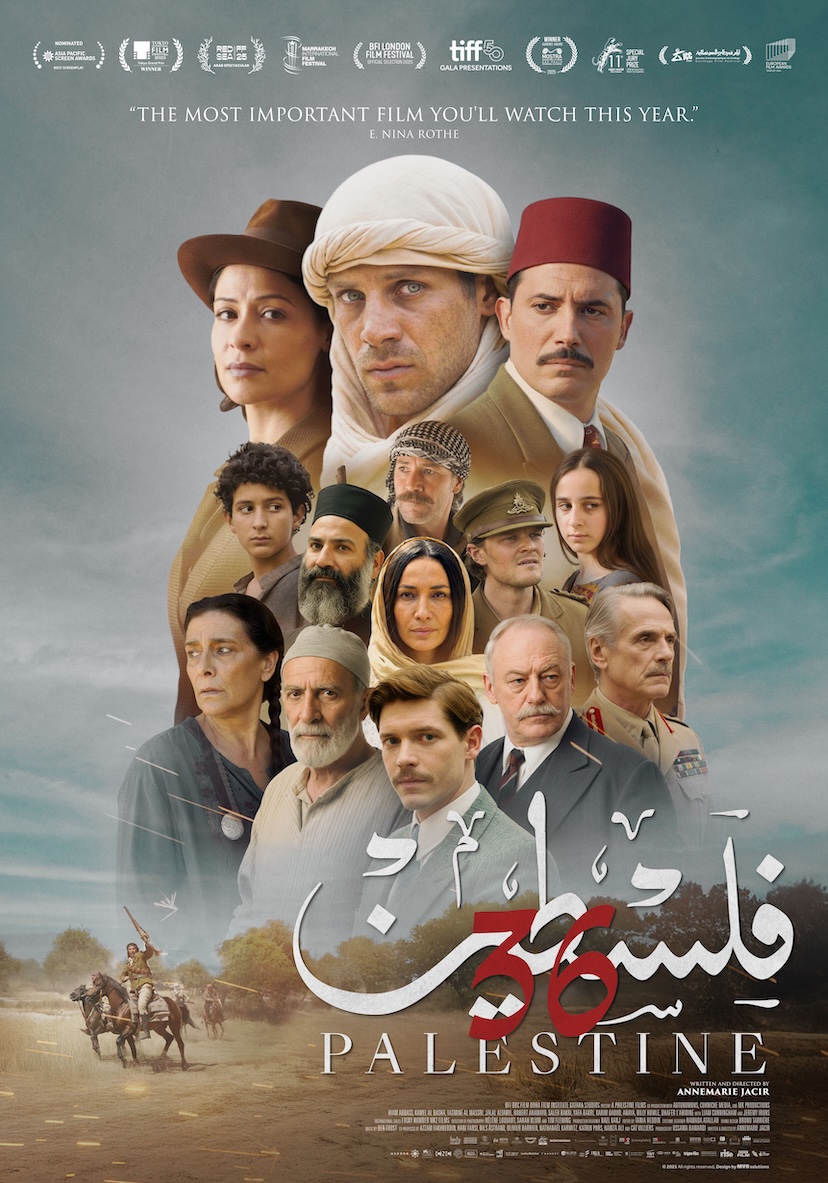
These personal memories helped shape Fakhreddin’s view that cultural work can play a powerful role in preserving history and identity.
“I was raised with the idea that life is not only about business,” he says. “Being part of your community and contributing to communal work is just as important.”
Cultural projects have long been part of that commitment. Fakhreddin has supported theatre productions, cultural festivals, and artistic initiatives throughout the region. He is also a founder of Friends of Jordan Festivals, an organization that promotes cultural events and music programming.
Film has always held a special place in his interests. While studying at the American University in Cairo, he explored filmmaking through coursework and developed a deep appreciation for storytelling as a form of cultural expression.
“I have always believed that storytelling and film are powerful forms of resistance,” he says. “For many years, cultural resistance has been neglected, but it has the ability to reach people in ways that other forms cannot.”
His connection to Palestine 36 began several years ago through director Annemarie Jacir and producer Osama Bawardi, longtime collaborators and friends. Jacir first shared the idea for the film nearly eight years before production began.
From the beginning, the project was ambitious. The film explores the Palestinian revolt against British colonial rule between 1936 and 1939, a period many historians consider foundational to the events that followed in Palestine.
“When Annemarie told me about the story and the scale of the project, something moved inside me immediately,” Fakhreddin recalls.

The historical moment resonated strongly because of his family’s own experience during that period. What also appealed to him was the film’s intention to tell the story on an epic cinematic scale rather than as a small independent production.
“It was not meant to be a shy independent film,” he says. “It was meant to be something epic, something that could stand alongside major historical films.”
Fakhreddin joined the project in 2020 as an executive producer. Over time his involvement expanded into a broader role as co-producer. He helped raise funding, worked on marketing and distribution strategies, and played an active role in promoting awareness around the film.
The production journey itself was far from straightforward. The film was originally intended to be shot in Palestine. However, following the events of October 7 and the escalating violence in the region, the production was forced to relocate to Jordan.
Fakhreddin helped support the logistical transition, assisting in securing filming locations and coordinating aspects of the move.
“It was a very emotional period,” he says. “While we were working on the film, we were also witnessing a devastating reality unfolding.”
Despite those challenges, the production moved forward. Fakhreddin also appears briefly in the film in a small role during one of the social gathering scenes and in a segment depicting the Muslim Association.
Still, his primary contribution remained behind the scenes, supporting the film’s broader mission.
For him, Palestine 36 is not only about revisiting history but also about challenging narratives that have dominated global understanding of the region.
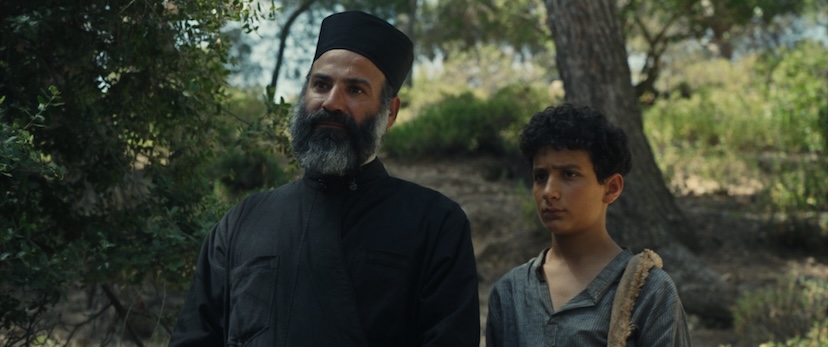
“One of the most important aspects of the film is showing that Palestine was always a land with people,” he says. “You see the farmers, the port workers, the families in Jerusalem, the different social classes. You see a functioning society.”
That portrayal directly counters the long repeated claim that Palestine was “a land without a people.”
The film also highlights a complex moment in Palestinian history, showing the tensions between resistance, collaboration, and colonial power structures.
One scene in particular stands out to Fakhreddin. It depicts Palestinian figures listening to the findings of the Peel Commission while realizing that British promises of fairness were unlikely to materialize.
“You see the expressions on their faces,” he says. “Some were collaborators, some were resistance fighters, and they all realize they were deceived. That moment is very powerful because it shows how history repeats itself.”
Another striking element of the film is its depiction of collective punishment against Palestinian villages, scenes that resonate painfully with contemporary events.
For Fakhreddin, cinema has the ability to bridge historical memory and present reality in a way that few mediums can.
“This is a war of knowledge,” he says. “Films reach people in ways that weapons cannot.”
The film has already received significant artistic recognition. Its cinematography, costumes, and production design have been widely praised, and the project was shortlisted for an Academy Award.
For Fakhreddin, that recognition carries symbolic significance.
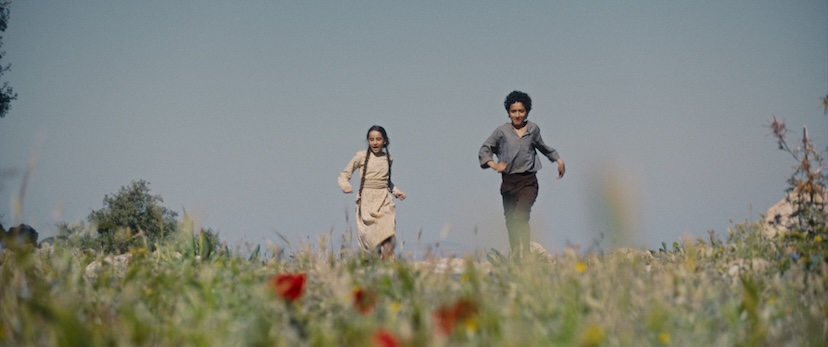
“Having a film called Palestine 36 shortlisted for an Oscar shows that artistically there is something powerful here,” he says. “It is a Palestinian film, produced by Palestinians, directed by a Palestinian.”
Beyond awards, the film has sparked conversations among viewers who were previously unfamiliar with the events of the 1936 revolt.
Even among Arab audiences, many have discovered aspects of the history they had not fully explored before.
“The revolt of 1936 is rarely discussed compared to 1948 or 1967,” Fakhreddin explains. “But it was a pivotal moment. It laid the groundwork for everything that followed.”
He points out that before 1936, the Jewish population in Palestine represented only a small percentage of the overall population. By the end of the revolt and the influx of immigration during that period, the demographic landscape had shifted dramatically.
By focusing on this earlier chapter, Palestine 36 aims to broaden the historical lens through which audiences understand the Palestinian story.
Fakhreddin hopes the film will particularly resonate with younger generations.
“I want the younger generation to understand the truth of what happened,” he says. “There has been a great deal of propaganda shaping the narrative for decades.”
The film has also received support from several prominent historians, including Avi Shlaim, Ilan Pappe, and Salman Abu Sitta, who have acknowledged the film’s historical accuracy.
For Fakhreddin, that validation reinforces the film’s role as both an artistic achievement and an educational tool.
“Cinema, theatre, and cultural storytelling shape historical narratives,” he says. “When stories are told in powerful ways, they stay with people for generations.”
Ultimately, his hope is that Palestine 36 will encourage viewers around the world to ask questions, seek knowledge, and engage more deeply with history.
“This film is about opening people’s eyes,” he says. “It is about understanding a part of history that has too often been ignored.”
Visit palestine36.com to learn more about the film and learn how you can watch it.