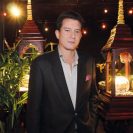
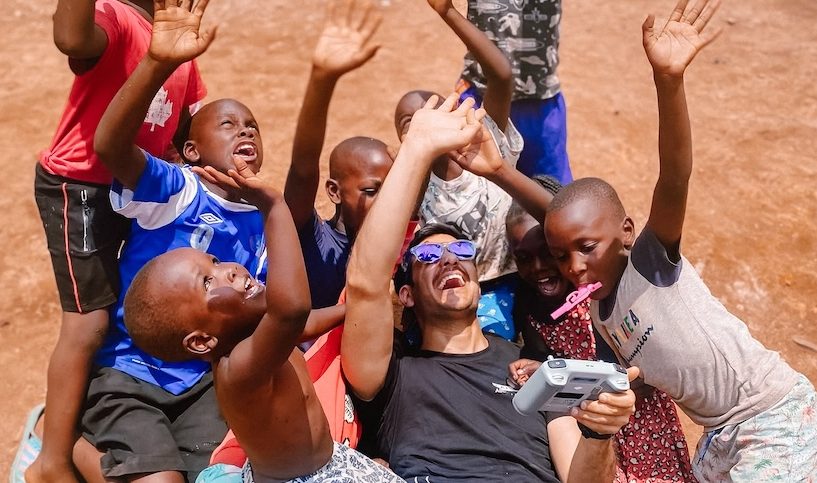
When Abdullah Albenayan introduces himself, he keeps it simple.
“I’m Abdullah.”
There are no titles, positions, or family names attached. For Albenayan, who someone is matters more than the labels attached to them. Ask him in a professional setting, however, and the story becomes a little longer: a mechanical engineer by degree, a traveler, an entrepreneur, and someone who has spent much of his life moving between countries and cultures.
He studied in the United States before moving to the Netherlands, where he worked for a year, followed by two years in Japan and then time in Vietnam. His professional beginnings were in mechanical engineering, working on smaller site projects. But even while studying, he knew there was one thing he did not want for his future.
“I didn’t want to end up working for someone for the rest of my life,” he says. What he wanted was not necessarily to find one perfect career. Instead, he wanted to build a life that would give him the freedom to pursue the things he genuinely loved. “For me, it doesn’t have to be something I like completely,” he explains. “It’s something that I will do that will make me do the things I love.” That distinction has shaped much of his entrepreneurial journey.
Building a Life, Not Just a Career
Albenayan’s businesses have largely been rooted in hospitality and food and beverage, but his relationship with entrepreneurship began with smaller experiments. While living in Japan, he discovered an American company selling elastic shoelaces. Rather than simply becoming a distributor, he contacted the company, negotiated with them, bought samples, sent them to China, and eventually created his own brand, Eyelase, which he brought to Kuwait.
Then came CAF, which he describes as his first major project and the first “baby” he built with his partners. His approach to business is remarkably practical. Before opening anything, he believes entrepreneurs need to answer two fundamental questions: What exactly is your business going to provide, and who are you providing it to? “You need to know your customers before you open a business,” he says.
He also believes every business has to understand where it sits between three key factors: price, quality, and experience. Trying to offer everything at once, he argues, is rarely sustainable. A business needs to understand which of those elements it wants to prioritize and build its proposition accordingly.
That pragmatism has become particularly important in Kuwait’s highly competitive market. “If you can make it in Kuwait, you will make it anywhere else,” he says. But succeeding in such a competitive environment requires something more important than simply having a good idea: adaptability. For Albenayan, one of the biggest lessons of recent years has been that toughness is not necessarily about being the strongest player in the room. It is about being able to change. “Be like water,” he says. “Water with a shape, it will shape the container it’s in.”
The philosophy became especially relevant during the disruptions and economic pressures of recent years, when businesses had to contend with rising costs, changing suppliers, and inflation while trying to maintain the quality customers expected. Being independent and relatively agile, he believes, can be an advantage when circumstances change quickly.
You Can’t Learn to Swim From a Book
Perhaps unsurprisingly, Albenayan’s philosophy on entrepreneurship is rooted more in experience than theory. He has little patience for the idea that simply reading about business is enough to become an entrepreneur. He recalls conversations with friends who consume books about business but have little practical experience, and sums up his position with an analogy that seems particularly fitting for someone who has spent years traveling the world.
“You can’t learn swimming by reading about water,” he says. “You have to jump.” For him, education and experience should work together. Read, study and learn, but then get into the water. That philosophy extends to failure. “Don’t be afraid to take risks,” is one of his first lessons. The second is perhaps even more fundamental: entrepreneurship is not simply about being smart. “It’s about being determined. It’s about committing, commitment, commitment.”
In his view, the difference between someone who succeeds and someone who does not is often less about intelligence than persistence. The successful person keeps trying after the first failure, then the second, then the third. “Failure is your best friend,” he says. “Failure is going to teach you the most.”
It is an attitude that has been tested throughout his own journey. Not every project worked. Some concepts performed well initially before eventually closing, including ventures that he says ended not because of poor performance but because of problems among the partners. The experience reinforced another lesson: even a promising business needs the resilience to withstand unexpected challenges. For Albenayan, that is simply part of the process.
A Different Way of Seeing Kuwait
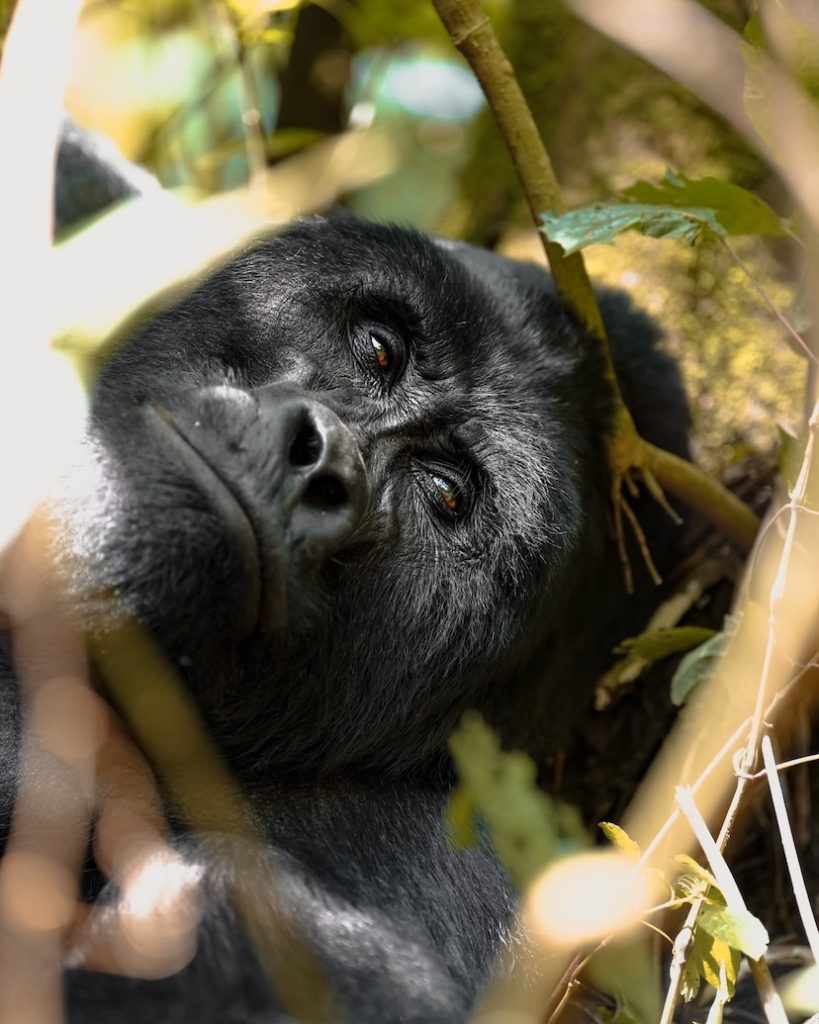
Long before entrepreneurship became a defining part of his life, there was photography. The passion began when he was young, during a trip to South Africa. Africa remains his favorite place on Earth, and he says he continues to return whenever he can. He began taking photography more seriously in 2007, when he purchased his first professional camera.
For years, however, he rarely shared the photographs. His wife was the one who repeatedly encouraged him to create an account and let people see his work. Eventually, he did. Today, photography remains an important part of his life, but deliberately outside his business identity. “I’m very moody,” he says. “I don’t want to turn it into something commercial. I’m afraid that I will hate it.” That is perhaps one of the most revealing things about Albenayan’s relationship with photography. While he does accept selected professional projects, he is careful about preserving the freedom that made photography meaningful to him in the first place.
Photography is, above all, a release. If he has had a difficult day, he can pick up his camera and disappear into the process. There is no obligation to produce something, no client to satisfy, and no commercial objective to meet. He photographs when he wants to, in the way he wants to. That separation is intentional. “I’d rather keep them separated,” he says of his entrepreneurial and photographic identities.
There is one exception: when the two worlds can benefit each other without compromising his creative freedom. He has occasionally offered hotels photography in exchange for a stay, essentially turning his passion into an opportunity without turning it into a career.
Finding Beauty Close to Home
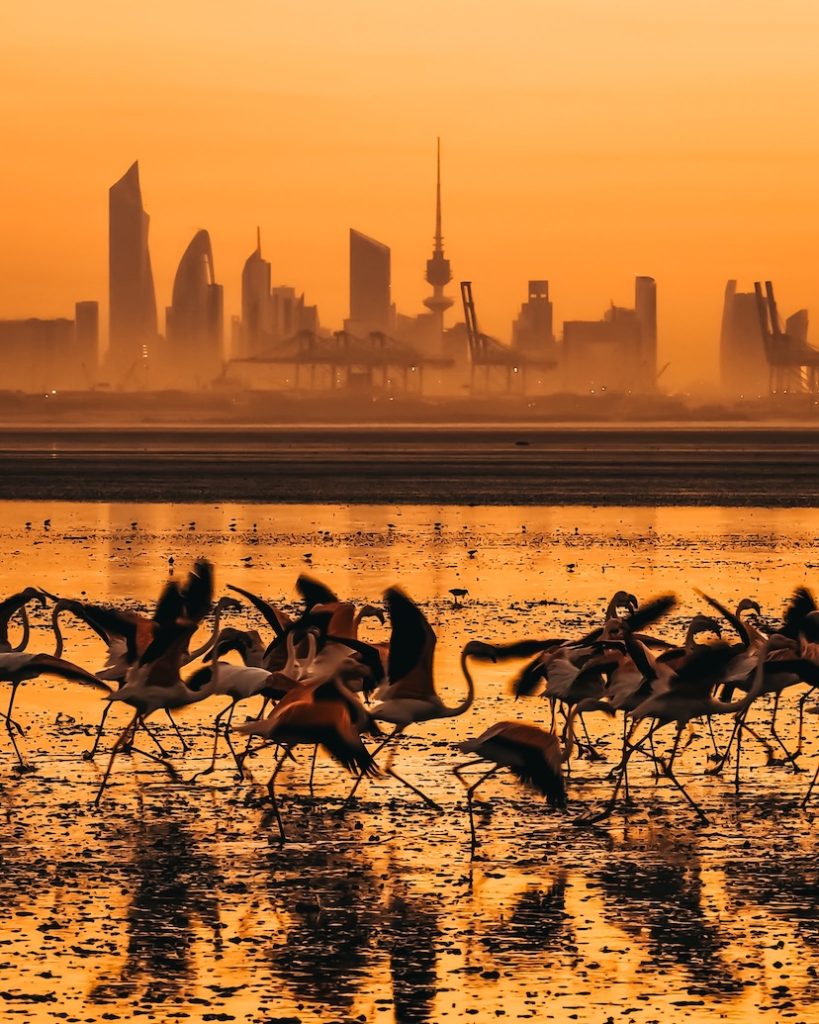
Travel was initially at the heart of his photography. But over time, Albenayan began to look more closely at home. “Kuwait is beautiful,” he says. “Not everybody is seeing it.” His photography has become a way of showing that side of the country, from its architecture to its landscapes and desert. He is particularly interested in changing the way people perceive places they think they already know. “Everything is beautiful. It depends on how you see it.” It is a philosophy that feels central to his photography. Beauty does not have to conform to one particular idea. A landscape does not need to be green to be beautiful. The desert, he points out, can be peaceful and extraordinary precisely because of what it is.
Photography, then, becomes less about simply recording what is in front of the camera and more about paying enough attention to see it differently.
The Photograph He Can’t Forget
Ask a photographer to choose a favorite photograph and you are likely to get some hesitation. Albenayan initially compares it to asking someone to choose a favorite child.
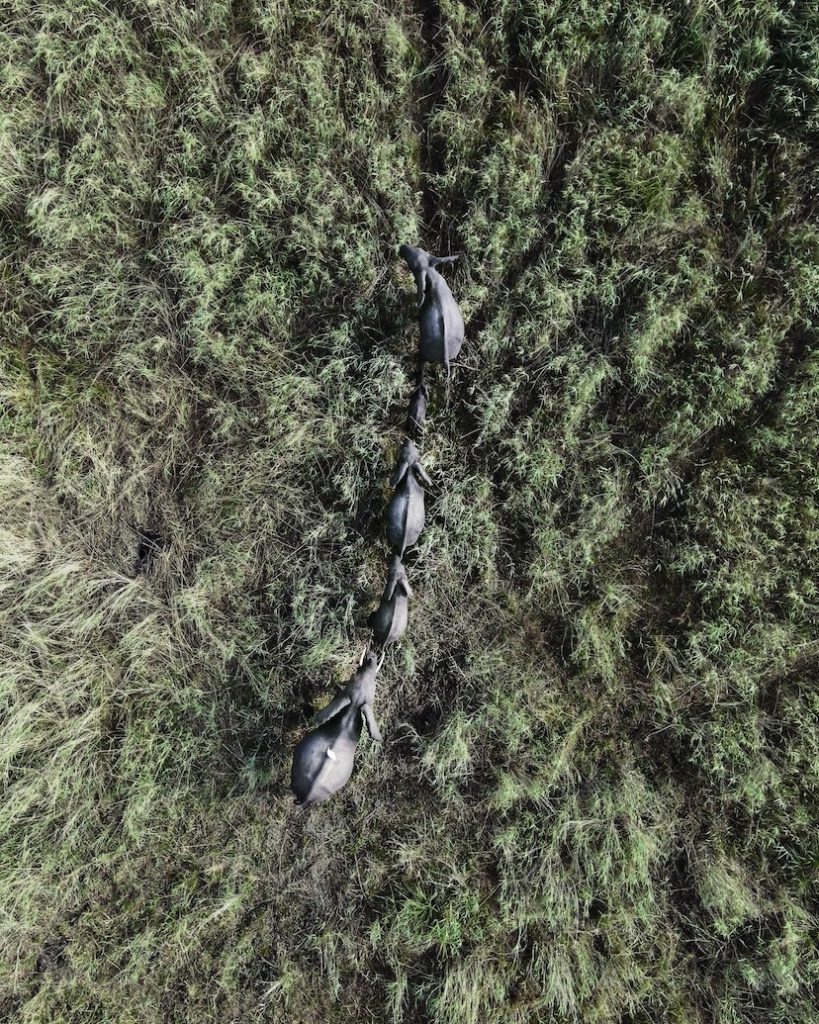
“I love all my photos,” he says. “They’re all special to me one way or another.” But there is one image that immediately comes to mind. While in Mozambique, Albenayan used a drone to photograph a herd of elephants moving through the landscape. From above, they appeared to be walking in almost perfect formation.
He later learned from a ranger that there was a reason for it. The largest elephants positioned themselves at the front and back of the herd, protecting the younger elephants in between.
The image has received significant attention and was published by National Geographic, according to Albenayan. He has also entered photography competitions, including the Siena photography awards, where one of his submissions was shortlisted and nominated for a grand prize. But the recognition is not necessarily what makes the photographs meaningful to him. The experience of taking them is. There is something particularly fitting about the fact that a photographer who has spent his career building businesses around people, products and experiences finds his greatest creative release in simply observing the world.

Keep the Future for the Future
So what comes next? Albenayan isn’t saying. He is currently working on several projects, describing them as “future babies” that he is developing slowly. Beyond that, he prefers to keep the element of surprise.
“Leave the future for the future,” he says. It is an answer that makes sense coming from someone whose approach to life has always been less about following a predetermined path and more about creating enough freedom to choose the next one.
His businesses have given him the means to travel, explore and photograph. Photography, in turn, gives him a space that belongs entirely to him. Perhaps that is the thread connecting all the seemingly different chapters of Abdullah Albenayan’s life. Engineering, entrepreneurship, travel and photography may look like separate pursuits on paper, but underneath them is the same instinct: learn by doing, stay curious, adapt when circumstances change, and build a life that leaves room for the things that matter.
And sometimes, he suggests, the smartest thing you can do with a talent is simply use it.
“You don’t have to love it. But if you’re good at it, use it. Utilize it.” For Albenayan, that may be the real business of living: knowing what you’re good at, knowing what you love, and making sure you leave enough room for both.
Follow @albenayan on Instagram to see the world through his lens.