by Yasmin Mostafa
Humoud Al Otaibi and Fajer Qabazard discover their mutual love for high-end furniture and Bauhaus minimalism.
Two millennials with an unconventional taste in upscale furniture come together and create Verge, a unique furniture and object design concept that pays tribute to the legacy of 20th century furniture and minimalistic designs that defined the era. With Fajer stumbling across an untapped opportunity in similar design directions, failing to find specific pieces that were more sculptural in her taste, and Humoud’s fascination with Bauhaus and nonconformist design approaches, they bumped heads and decided to co found Verge in 2023 and uplift and add to the diversity of the furniture scene in Kuwait.

Long before Verge existed, Humoud Al Otaibi was fascinated with object design and architecture of the 20th century, particularly a marriage of Bauhaus and Brutalist design styles, which influenced many of his chair recreations and designs at Verge. Bauhaus exemplifies “purpose over form” modus operandi, and Brutalist emphasizes raw materials, logical structures and purity of form. Both styles reimagined design and birthed the very first examples of minimalism. Having graduated from Swinburne University in Melbourne, Australia, a city that flourished in midcentury architecture, Humoud completed his degree in 20th century design and digital media design and upon graduating, became well versed in iconic designers and architects that inspired his early journey as a designer.

Back in Kuwait during his ex-banking days Humoud would look obsessively over a Brutalist building from the 1970s, from his office, The old Souk Al Wataniya. Searching for new quarters for BASTA as a recent board member of a non-profit organization supporting children’s education, Humoud thought if this brutalist interpretation of an arabesque design with its dated arches could house the new BASTA Space. Little did he know it would turn into an “object gallery” by night years later to showcase Verge pieces. Humoud began his first renovation opening up the place and transforming it into a beautiful modern space, fitting the old yard with a glass roof and fitting large beautiful wooden beams to textured worn out high ceilings. The space transformation was his first physical testament to his love for design.
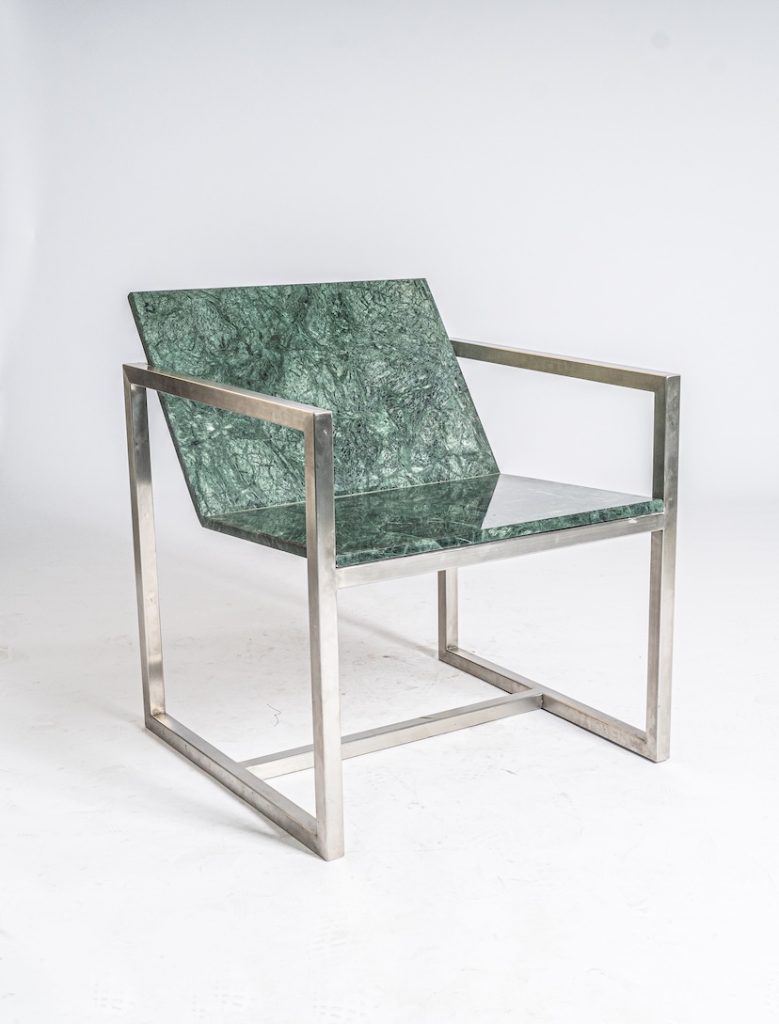
After this renovation came to light, Humoud’s interest in object design evolved and he decided to model the unavoidable dilemma of every designer, creating a personal chair. In 2017 he decided to design a chair without any idea he would start a furniture and object design concept business with current business partner, Fajer Qabazard. Convinced that every designer must design “A Chair” that reflects a design identity and act as an early design footprint, Humoud began sketching his first chair’s blueprints, a cube-like structure out of raw unconventional materials, stainless steel and Italian marble, giving the illusion that the marble seat is floating on air. His inspiration was his Divine spiritual journey and the cubical form of “The Holy Kaaba” in Mecca. That combined with derivative Bauhaus inspirations and minimalism at large found their way into the final form of his first ever chair “Kursy”. Years later the recreation for “Kursy” would be the starting point for Humoud and Fajer’s company launch.
Fajer Qabazard was the ideal business partner for Humoud. Coming from the Qabazards’ family known for their diverse artistic backgrounds, of artists, directors, producers and a close relative owning Que.haus, a concept boutique to curated home accessories and furniture, Fajer understood furniture well and the nuances of the Kuwait market when it came to niche preferences in specific design directions. She understood which segments would align with their unique brand identity, and how the brand’s customers perceive their needs when it comes to furniture. As the PR image of the brand, Fajer aims to cement Verge’s foundation in their niche market first and later expand it to a broader audience.
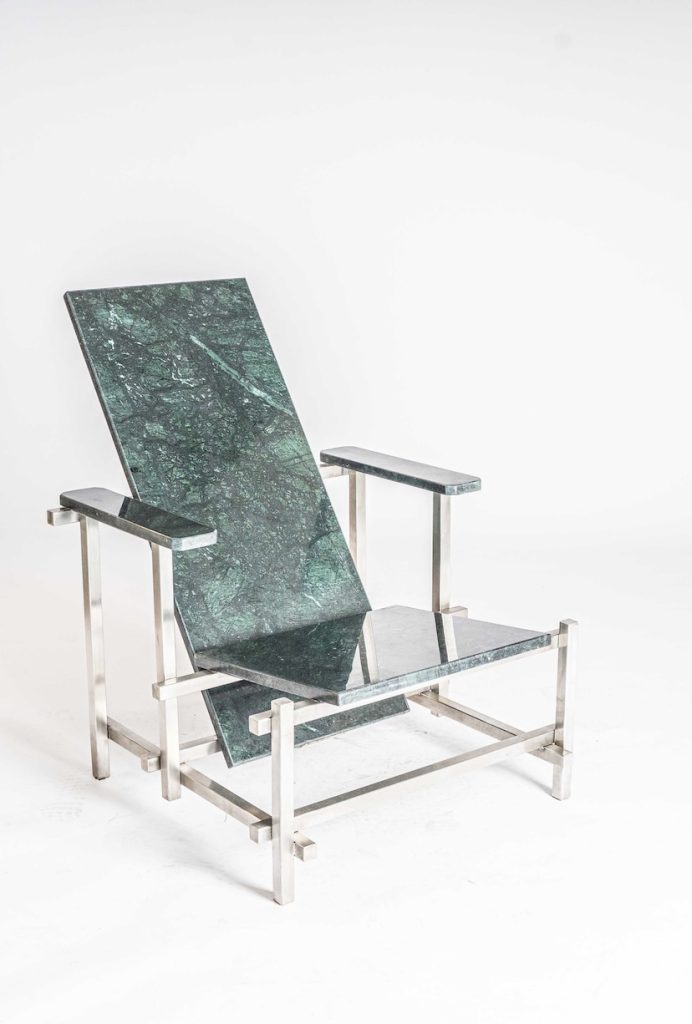
Humoud and Fajer started designing their first collection for Verge in 2023. The recurring materials common to their debut collection were stainless steel, green marble, and natural stone, equally favored and loved by both. The collection evolved to add limited reclaimed midcentury pieces from the 60s and 70s, wood, reupholstered leather and repurposed mink fur. The first chair for Verge, “Kursy” was a recreation of Humoud’s original chair back in 2017. Similarly made from stainless steel the seat was made from Indian marble to give it commercial durability. The Second chair came quickly after that, after a much-needed self-indulgent challenge. It was a recreation of the famous iconic Red and Blue chair by the Dutch designer and architect Garit Rietveld who followed a specific exploration of minimal simplicity with dimensional architectural planes. Humoud approached this fascinating recreation with a modern reinterpretation of the original wooden blueprints of the chair to pay homage to the mid-century/Bauhaus Designer from whom he takes inspiration. Though using stainless steel seemed like a hopeless task at first, as welding metal at such angles seemed inconceivably impossible, he dove into the challenge. He renamed his chair the “Green and Silver” chair after successfully transforming the blueprints into a marble and steel recreational haven of utmost craftsmanship, optimum angles perfected for the human posture, and a grounding of senses through the use of natural materials in their purest forms to maintain a brutalist aesthetic.
Yet another beautiful piece was “Al Atlal” named after Om Kulthum’s famous Arabic song from the 1960s Al Atlal meaning the word “ruins”. In a sustainable design approach Humoud recovered discarded limestone pillars and repurposed those “ruins” into sculptural drink tables. To extend the pillars’ aged look he welded an iron framework onto them chosen for iron’s inherent rusting property and exposed the welding burns to give an even more rough and organic finish. Later a green marble surface, common with their first collection pieces, was added on top to connect the pillars and create a beautiful sculptural drink table for Verge. In fact, the origins for the piece, those pillars, were made to connect with the title of the song “historical ruins”.
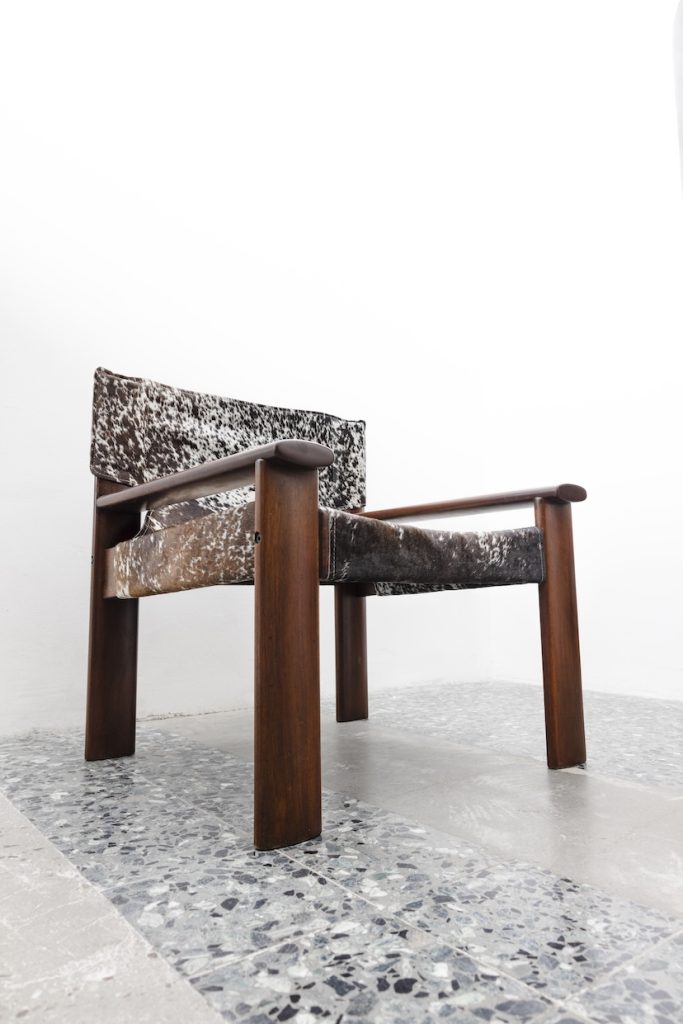
As an extension to their first collection, Humoud found another passion. Tapping into refurbished original pieces specifically re-claimed midcentury objects or chairs. He found a rare piece, a1955 mid-century chair by the famous Brazilian architect-designer Sergio Rodrigues, dubbed the Father of Brazilian furniture, of which only a few pieces were locally sourced and handmade in Brazil at the time, named the Brazilian sling chair. A beautiful wooden chair with a beautiful solid rosewood frame fitted with natural leather to suit the tropical climate of Brazil. Humoud lovingly began a full restoration on the reclaimed piece, sanded the old wood, re-stained it and replaced the original leather with cowhide to give it a modern and contemporary finish.
Verge’s second collection was done in a more complex approach with the use of richer and many more organic materials. Humoud and Fajer better understood stainless steel this time and re-injected the metal into their next collection using more sophisticated ways. Stainless steel took different forms in this collection using sheets over pipes that built the solid forms in the year before. This time, laser cutting precision techniques prevailed to bend the stainless-steel sheets with utmost precision into more comfortable angles. The duo aimed to redefine the conventional paradigms of stainless steel which was once considered a “hostile material” and turned it into an organic warm finished piece.
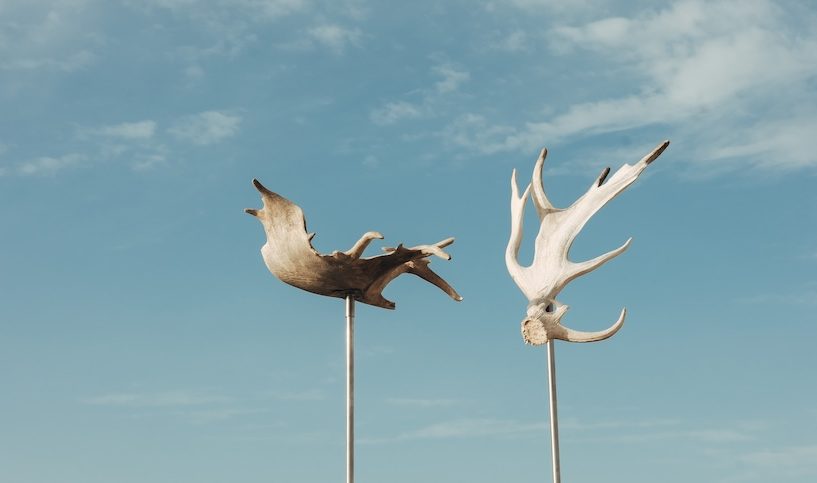
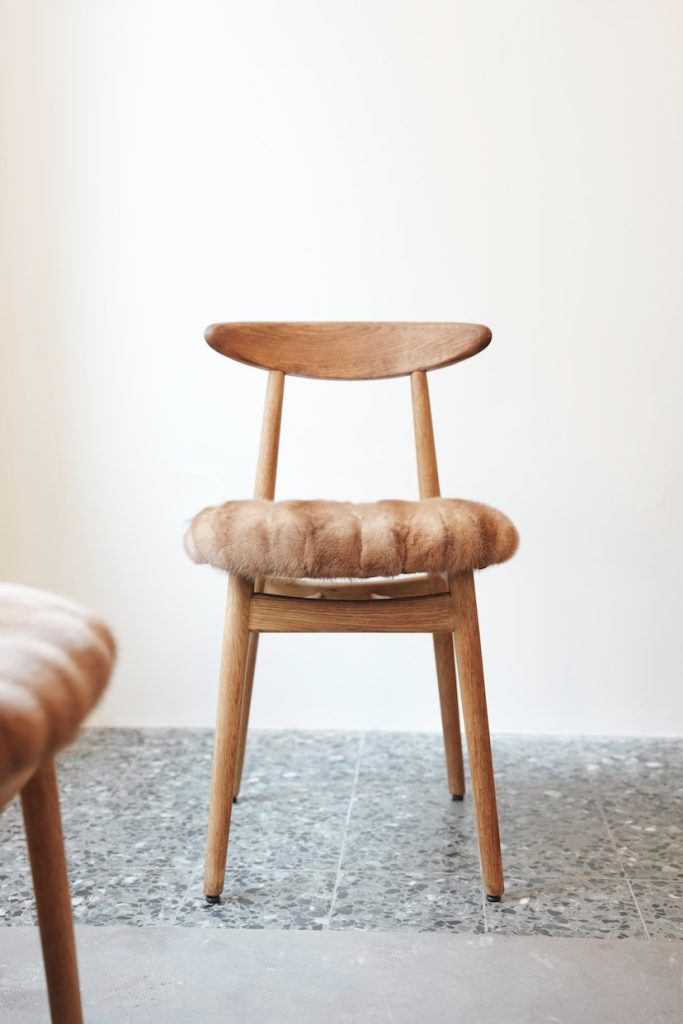
The sustainability angle of the brand lies in a consistent design approach which aims to restore reclaimed classics and upcycling or repurposing organic material into new recreations. One of Verge’s reclaimed chairs, the 60s midcentury Mink Chair, was reupholstered out of repurposed mink. In an effort to weave a love story into his creations, Humoud transformed a loved piece by his late mother, an old fabulous Vintage mink coat Circa 1970s on reclaimed mid century desk chairs to give his pieces a special meaning. Though the pieces sold were limited pieces, he aims to reproduce it in commercial quantities but made to order, from once again repurposed mink and the original blueprints of the reclaimed chair. Another sustainable object/piece is the silver ottoman whose cowhide was sourced from leftover fabric from Humoud’s second business, his refined avantgarde tailoring, Crude, a consistent link that exists in material and form between both brands. In a similar example, another refurbished 70s armchair was reupholstered in cowhide that fed into Crude’s signature corsets using the leftover material. The focal point of Verge’s sustainability, was the use of discarded naturally shed antlers in their recent collection from deer on one of Kuwait’s farms and were incorporated into signature pieces and as sculptural pieces on their own.
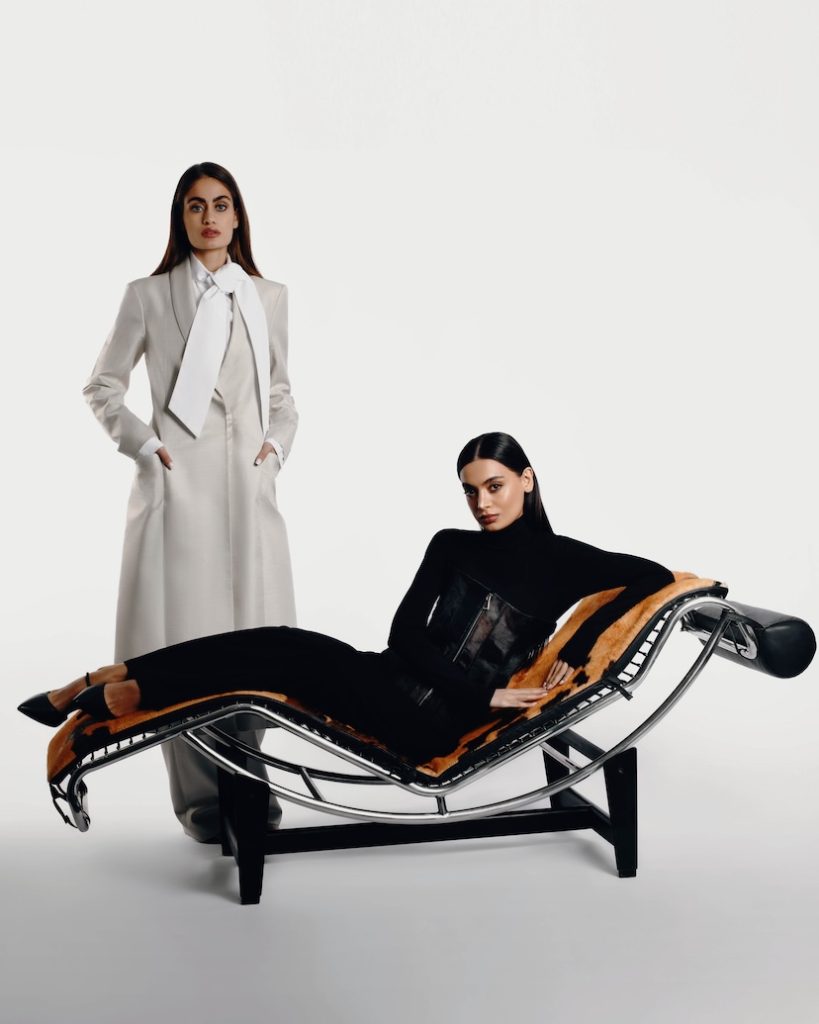
Yet again an iconic reclaimed piece in the second collection is the timeless classic, Le Corbusier LC4 lounge chair from 1964, a collaboration by French designers C. Perriand and Le Corbusier and Swiss Architect P. Jeanneret. After getting his hands on this quintessential original piece that sustained weathering and damage to the pony skin Humoud reconditioned it and later dyed it with an orange Henna dye to saturate the hide/hairs with color, tone and vividness and gave the final piece a more youthful look to fit today’s Spaces.
Humoud and Fajer understand their unconventional designs pushes boundaries and aim to bring about a shift in taste in Kuwait through awareness and a sense of “el zaman el gameel” through creating more “showroom” events to allow the public to familiarize themselves more with their midcentury classic and timeless designs. They further aim to create a community and collaborate with potential artists in the field. By continually adding pieces to their collections in reclaimed or repurposed fashion, it allows them to weave sophisticated stories and unique brand storytelling for their customers.
As the Co-Founder and PR image for the brand, Fajer speaks of the brand’s bold plans for a consistent production line and expansions into Bahrain and Saudi markets, specifically the city of Riyadh. She recognizes that both communities have their traditions rooted in the arts and promote the arts strongly, and above all the arts scene is believed by both Founders to align with the innovative energy of the brand. The utmost goal for both is for their Verge pieces to find “ a home” and fit into every house that appreciates classic timeless statement pieces that give each its distinct voice.
Follow @by.verge for a look at their timeless designs or DM them to place your orders.