
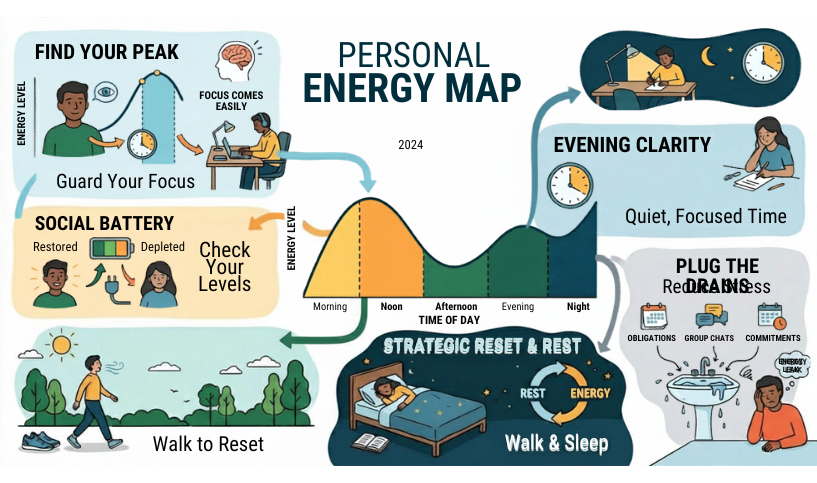
Productivity culture wants you to believe that discipline is the answer, that if you just wake up earlier, batch your tasks, and protect your mornings, everything will fall into place. What it skips over is that energy is not the same thing as time. An hour at 7am is not the same hour for everyone, and pretending otherwise is how people spend years being efficient at the wrong things.
Find your peak window Most people have two to three hours a day when their thinking is genuinely sharp, their focus comes easily, and their best work happens without force. The problem is those hours are rarely protected. They get eaten by emails, meetings, and tasks that could have waited. Identify yours, guard them as you would any non-negotiable appointment, and notice what changes.
Know your social battery Some people leave a long lunch feeling restored. Others leave it feeling quietly depleted, even if they enjoyed it. Neither is wrong, but mistaking one for the other is costly. Pay attention to which interactions give you something back and which ones require recovery time afterward. Your calendar should reflect that distinction, not ignore it.
The mid-afternoon reset The post-lunch dip is not a character flaw. It is biology, and most office cultures pretend it doesn’t exist. A ten-minute walk, a few minutes outside, or even a deliberate pause with no screen can do more for the quality of your afternoon than pushing through ever will. The reset is not laziness. It is maintenance.
Evening is not dead time A common mistake is treating the evening as the place where the day’s leftovers go. For some people, early evening is actually a second window of clarity, quieter and less pressured than the morning. If that’s true for you, stop filling it with passive scrolling by default and give it something worth the hour.
The things that drain you quietly Not all energy leaks are obvious. Sometimes it’s a recurring obligation you’ve never questioned, a group chat that demands more than it returns, a commitment made in a different season of life that no longer fits. An energy map isn’t just about when you work well. It’s also about what you should probably stop doing.
Rest as a non-negotiable, not a reward The framing of rest as something you earn after enough productivity is one of the more damaging ideas of modern work culture. Rest is not the end of the cycle. It is part of it. Building it in deliberately, rather than collapsing into it when you have no choice, is what makes everything else sustainable.