
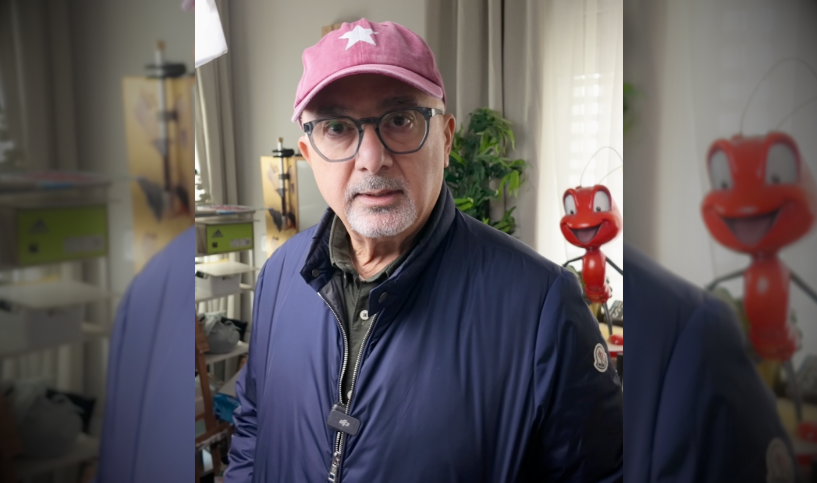
There’s a version of Youssef El Deeb’s story that reads like a highlight reel. The man who created Fatafeat, the food channel that became part of the actual fabric of Arab family life and sold it to Discovery Communications.
The man who built Takhayal Entertainment one of regional media’s innovative media companies. The creative force behind decades of content that reached millions of screens across the Arab world, from MBC’s pioneering years to the intimate digital communities he’s building now.
That version is true. It’s also, by his own account, completely beside the point. “I say the name,” he tells me, when I ask how he introduces himself. “Youssef. The rest, the channels, the companies, the whole magnificent stuff, that’s just what the character got up to while I was busy being the author.”
It takes a certain kind of person to describe their own career as something that happened to a character. It takes someone who has been paying attention to the deeper story all along.
Youssef grew up hungry. He says it without self-pity, almost with gratitude, the way someone describes the teacher who was hardest on them and turned out to be the one who mattered most. Scarcity, he explains, is a remarkable lens. It makes you see the sacred in the ordinary. He can still locate, with precise sensory memory, the smell of a schoolmate’s butter sandwich from six decades ago.
That early education in noticing things, in finding meaning in what others overlook, would become the foundation of everything he built.
Cinema came first. It asked him, as he describes it, a marvelous question at the door: would you like to lose your wallet and gain your soul? He said yes without hesitation. Then advertising arrived, which he calls, borrowing from Henry Miller, “a very elegant mugging.” The late Alain Khoury, founder of Impact/BBDO and a man Youssef credits with shaping his storytelling instincts, handed him a principle he’s carried ever since: thirty seconds, one idea, no fluff. The audience owes you precisely nothing.
“Which is, if you think about it, the most liberating thing anyone ever said to me.”
Cinema gave him mythology. Advertising gave him the knife. Television gave him the amphitheater.
By the time he arrived at MBC Group in a leadership role during one of Arab broadcasting’s most pivotal periods, he had already developed a way of seeing audiences that ran counter to how most media executives thought about them. Where others saw demographics, segments, and viewership metrics, Youssef saw something closer to a covenant.
“The Arab audience is the most sophisticated audience I’ve ever performed for,” he says. “They are connoisseurs of authenticity with an almost supernatural sensitivity to the counterfeit. Betray them once and they become a rather spectacular wall.”What he learned, and hasn’t forgotten since, is that Arabs don’t consume content. They inhabit it.
Fatafeat began as a wager. Not a safe, focus-grouped, committee-approved wager, but the kind of bet you place because you see something clearly that others haven’t noticed yet
The insight wasn’t about food. It was about women. Arab women, specifically, and the absence of a media frequency that respected their intelligence and reflected their world back to them without condescension. The cooking channel format existed everywhere. The soul of it, Youssef insists, did not.
“What I built at Fatafeat was not a cooking channel. It was a frequency that Arab women had been waiting for.”
The channel became part of the texture of people’s mornings, their Ramadans, their family mythologies. It happened because of a visionary, Nasser Al-Kharafi, the Kuwaiti businessman who funded the whole experiment and, in Youssef’s words, set him free to fly with it. When Al-Kharafi died, the institutional machinery moved in the predictable direction. The channel was taken somewhere else.
“Like a father who loses custody of his most beloved creation. The grief was genuinely Shakespearean. I mean that literally.”
He says it without bitterness. The lesson, expensive as it was, he learned completely: impermanence isn’t a concept, it’s a policy. Every single moment.
Takhayal Entertainment, the company he launched after his time at MBC, had a name that was itself a kind of manifesto. Not Imagination.
Imagine. The Arabic command form, ﺗﺨﻴّﻞ, do the thing, don’t just describe it.
“I’ve always believed that names are spells. Choose them carefully.”
The philosophy driving Takhayal was a reaction to something he’d watched happen across Arab content, the creeping tendency to make work by committee, to ask “what does the audience want?” instead of “what do I have to say that nobody else could possibly say?” The result of the wrong question, he observed, was always the same: content that felt like inventory rather than expression. Obligatory divorces, screaming, villains with cigarettes, characters who were nobody’s neighbors. ﺷﺒﻬﻨﺎ, he says. Nobody who looked like us.
At Takhayal, the operating philosophy was what he calls pirate logic. You see the true shape of the thing and then you simply do it. Not pursue it. Not explore the possibility of it. Do it. He has a word for the projects worth committing to: they produce a genuine and specific variety of terror. The fear, he insists, is not a warning. It’s a compass.
The Discovery Communications acquisition followed. A landmark exit. And then came the lesson about what it costs to let go too soon.
There’s a particular quality to the way Youssef talks about the current media landscape. It isn’t the nostalgic hand-wringing of someone who peaked in a previous era. It’s the focused diagnosis of someone still very much in the game, watching patterns that concern him.
“The map is upside down and most people are navigating with great confidence in entirely the wrong direction.”
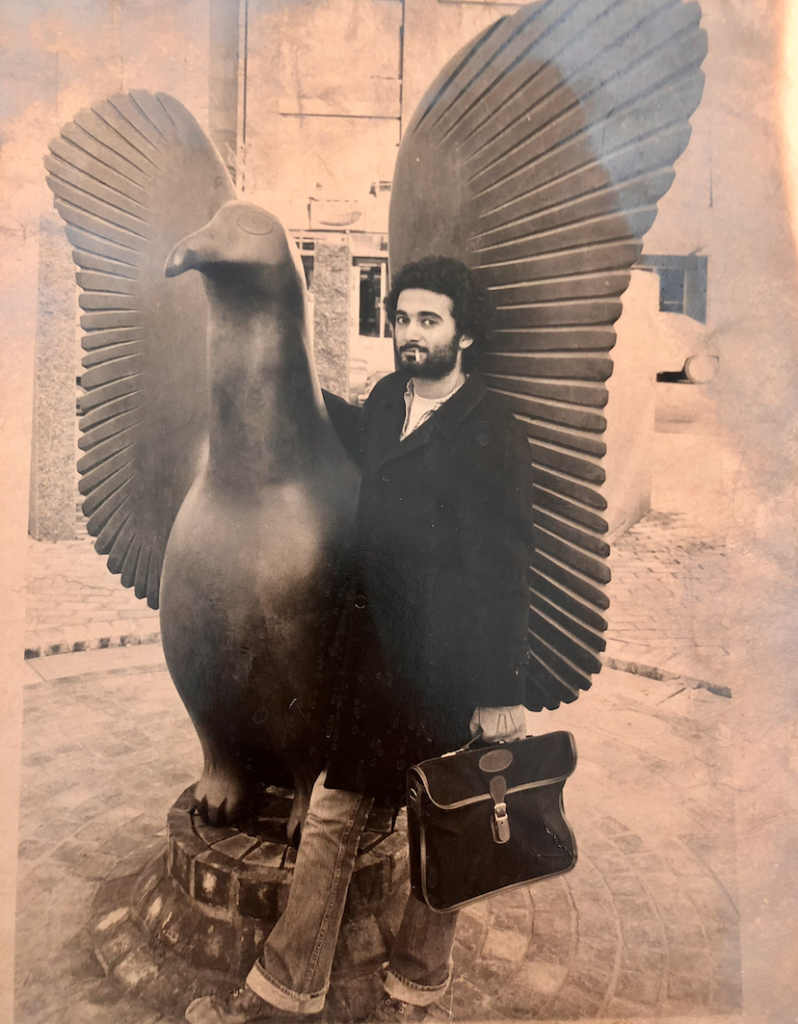
The word “creator,” he observes, once meant bringing into the world something that wasn’t there before. Your specific, unrepeatable addition to the long human conversation. Now it largely means filming yourself reacting to other people filming themselves reacting. A hall of mirrors with particularly good lighting.
He is especially sharp on the subject of algorithms. The tendency he sees among young creators to chase the algorithm as though it were the audience. The algorithm, he points out, changes its preferences seasonally. The human being watching hasn’t changed in ten thousand years. They want to feel something true. That’s what art has always been the technology for.
“A young person asked me recently how they’d know if they were a real artist,” he says. “I said: are you afraid of failing? Then yes. You are.”
His advice to anyone trying to build something in the current fragmented ecosystem is counterintuitive: stop trying to build a media brand. A media brand is what settles on top of something real. What actually works, and he’s watched it carefully across five decades, is going narrow and deep until depth becomes its own kind of gravity. Find the specific human beings who need precisely what only you can give them. Serve them without compromise or condescension.
Niches become communities. Communities become movements. Movements, occasionally, become something that outlasts the person who started them.
His platform Aklopedia was built on exactly this logic, supporting the smallest food creators specifically, not all food creators, only the smallest. That specificity, he says, is not a limitation. It’s a superpower.
The thing that stays with you, after spending time with Youssef’s words, is not the scale of what he’s built. It’s the through-line running underneath all of it. His mother, in the darkest possible circumstances, insisted on the light. He has been stealing that line ever since, or as he prefers to frame it, claiming his inheritance.
اﻟﺤﻴﺎة ﺣﻠﻮة. Life is beautiful. Not as sentiment. As instructions.
Every brief, every casting decision, every format decision passed through that question: does this enrich someone’s Tuesday? If yes, proceed. If no, burn it down and find the real thing underneath.
He keeps what he calls his backwards to-do list, everything he hasn’t made yet. He looks at it when he’s tempted to think he’s finished. The list is long. The urgency is real.
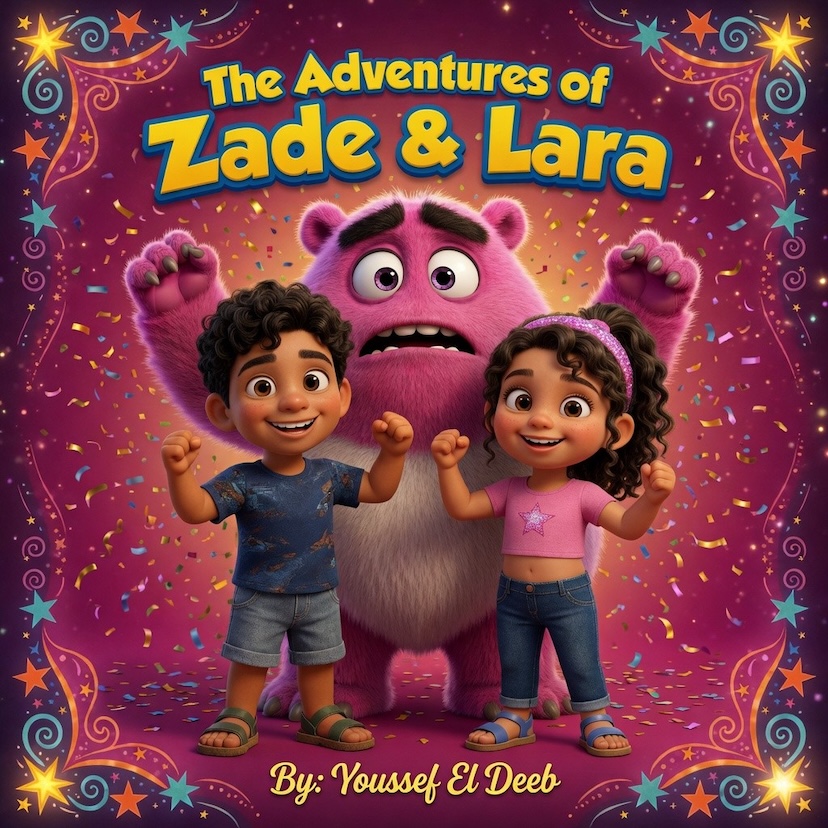
Picture Pond Media is where he does his hands-on work now. His grandson flinched at a thunderstorm, and Youssef went home and wrote him a book. That book became Fearless Me, a children’s project rooted in the same conviction that has shaped everything else: the Arab child is being catastrophically underserved, and that alone is reason enough to show up.
When I ask about legacy, he dismisses the question almost affectionately. Legacy, he says, is someone else’s preoccupation entirely. He is here. Today. The present tense is where all the interesting things happen.
He is seventy-something years of hard-earned instinct in a room, and he is already thinking about what he can’t do yet.
“The fear is the address,” he says. “I follow it home.”
Life is beautiful. The instructions stand. Youssef El Deeb is the founder of Takhayal Entertainment and Picture Pond Media, and the creator of Fatafeat TV. He currently runs Aklopedia and continues to develop film, publishing, and digital content projects across the region.