
You know the feeling. You make pasta at home, follow the recipe, plate it nicely and take a bite. It’s good. Perfectly good.
Then you order pasta at a restaurant and suddenly wonder what you have been doing wrong for the last decade.
The ingredients might not even be dramatically different. So why does restaurant food so often taste better?
The answer is less mysterious than you might think. Professional kitchens simply have more experience, more equipment, more time devoted to preparation and, perhaps most importantly, fewer reservations about using the ingredients that make food delicious.
SALT IS NOT THE ENEMY
One of the biggest differences between restaurant cooking and home cooking is seasoning.
Professional cooks taste constantly and adjust throughout the cooking process. Home cooks, meanwhile, can be strangely cautious with salt, adding a little at the beginning and hoping for the best.
Salt does more than make food taste salty. It can enhance other flavors and help a dish taste more balanced. America’s Test Kitchen notes that our saltiness receptors are most responsive when food is between 85 and 95 degrees Fahrenheit, close to the temperature inside our mouths.
The lesson is simple: taste your food before serving it. It may not need more ingredients. It may simply need better seasoning.
FAT IS FLAVOR’S BEST FRIEND
Butter, olive oil, cream, cheese and other fats are not exactly secrets, but restaurants tend to use them with considerably more confidence.
Fat carries and distributes flavor, while ingredients such as butter can add richness and create a satisfying texture. That glossy sauce over your vegetables? It probably did not arrive there through good intentions.
This does not mean pouring half a block of butter into everything you cook. It means understanding that richness is part of the architecture of a dish. A little finishing butter, a drizzle of good olive oil or a spoonful of properly made sauce can transform something that tastes flat into something that feels complete.
HIGH HEAT CHANGES EVERYTHING
Restaurant kitchens are designed for serious cooking. Powerful burners, hot pans and professional equipment allow cooks to develop deep browning and caramelization quickly.
At home, we are often too impatient. We put crowded ingredients into a pan, turn the heat down when everything starts steaming and wonder why our vegetables never develop that beautiful golden exterior.
Give ingredients room. Let the pan get properly hot. Resist the urge to constantly move everything around.
That brown crust is not decoration. It is flavor.
SAUCE IS THE GREAT TRANSFORMER
A restaurant meal often contains more components than we realize.
There may be a sauce, a purée, a reduction, a seasoned oil, pickled vegetables, herbs or a finishing garnish quietly making everything else taste more interesting.
America’s Test Kitchen specifically highlights sauces as a way of transforming otherwise familiar dishes, noting that they can instantly elevate proteins, vegetables and other foods.
At home, we tend to think of sauce as an optional extra. Restaurants understand that it can be the thing that pulls the entire plate together.
THEY HAVE ALREADY DONE THE BORING PART
Perhaps the biggest advantage restaurants have is preparation.
Professional kitchens spend considerable time chopping, marinating, reducing, seasoning and organizing before a dish ever reaches the customer. America’s Test Kitchen describes its own recipe-development process as involving repeated testing of variables before arriving at the final version.
At home, we are trying to do the same thing after work, while hungry, distracted and wondering whether anyone else is going to wash the dishes.
Restaurant food is not necessarily magical. It is the result of repetition, technique and attention to detail.
And there is good news: you do not need a professional kitchen to borrow some of those habits.
Season as you go. Let pans get hot. Do not overcrowd them. Finish with something fresh, rich or acidic. Make a sauce. Taste before serving.
And occasionally, use more butter.
Your kitchen may never become a restaurant. But dinner can certainly start tasting like one.
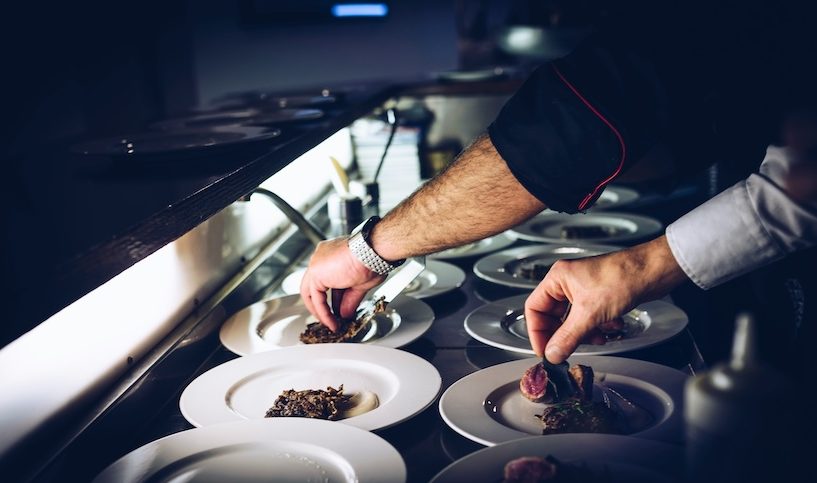
Image by Fabrizio Magoni on Unsplash.