
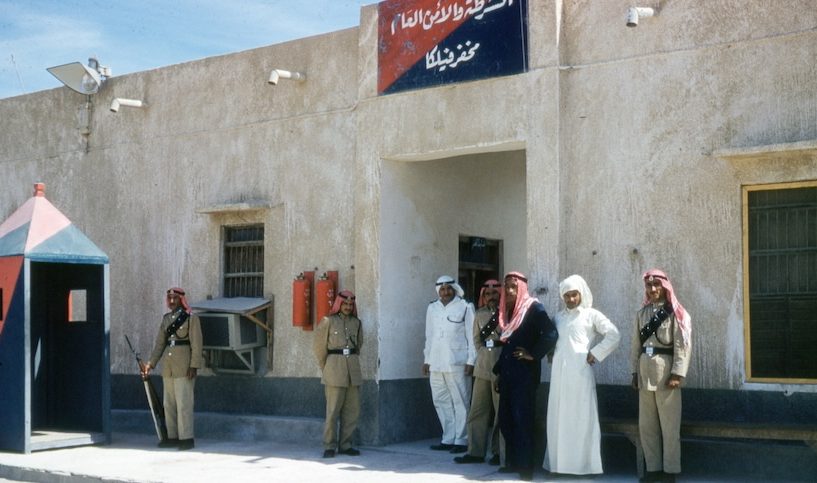
There is a strange thing that happens when you live somewhere long enough. The extraordinary becomes ordinary. The sea becomes part of your commute, familiar buildings fade into the background, and the little details that make a city itself become things you barely notice. We spend so much time looking for somewhere new to explore that we forget how much there is to discover right outside our doors.
Kuwait is particularly good at hiding its character in plain sight. Beyond the skyline and the latest openings is a city of small rituals, familiar sounds, architectural details and everyday moments that tell a much richer story. Sometimes, all it takes is a slightly different route home to remember why this place feels like nowhere else.
THE OLD SHOP SIGNS
Before everything became polished branding and matching storefronts, there were hand-painted signs, wonderfully specific shop names and lettering that seemed to have a personality of its own. You can still find traces of this visual history in older commercial streets, particularly around Kuwait City and Hawally.
Look closely at the typography, the colours and the way Arabic and English share space. These signs are tiny pieces of design history, often created with more character than an entire contemporary branding campaign.
THE SOUND OF THE SOUK
Al Mubarakiya is not just somewhere to shop. It is an entire sensory experience. The conversations between shopkeepers, the clinking of tea glasses, the smell of spices and the unmistakable rhythm of people moving through narrow passages all contribute to its atmosphere.
There is something reassuring about a place that encourages you to wander without a particular destination. You might arrive looking for one thing and leave with something completely different, along with a conversation you never expected to have.
THE ARCHITECTURE BETWEEN THE LANDMARKS
Kuwait’s architectural story is not limited to its most recognisable buildings. Look beyond the obvious landmarks and you will find older houses, shaded entrances, decorative metalwork, patterned concrete blocks and buildings that reflect different chapters of the country’s development.
Some details were designed for the climate, others for privacy, and many simply reflect the aesthetic preferences of another era. Together, they create a visual language that is easy to overlook when we are moving too quickly.
Next time you walk through an older neighbourhood, look up. The interesting part might be above the shopfront.
THE SEA THAT IS ALWAYS THERE
For a country with such a deep maritime history, it is surprisingly easy to treat the waterfront as background scenery. We drive alongside it, arrange coffee meetings overlooking it and occasionally remember to stop and enjoy it.
But the Gulf changes character throughout the day. Early mornings bring a different kind of quiet, while late afternoons soften the skyline and turn familiar stretches of coastline into something worth photographing.
You do not need a beach day or an elaborate plan. Sometimes, twenty minutes watching the water is enough.
THE LITTLE SOCIAL RITUALS
Some of Kuwait’s most recognisable details are not physical at all. They are the small gestures that shape everyday life. The insistence that a guest has something to drink, the conversations that begin with a greeting and somehow last half an hour, and the way a quick visit can turn into an entire evening.
The diwaniya remains one of the country’s defining social traditions, but that spirit of gathering extends far beyond a single space. It lives in homes, workplaces, neighbourhoods and the familiar places where people meet.
These rituals are so embedded in daily life that we rarely stop to consider how much they contribute to the feeling of belonging.
THE CITY BEFORE EVERYONE WAKES UP
Kuwait has an entirely different personality in the early morning. Streets that will soon be crowded are briefly peaceful, the light is gentler, and even familiar neighbourhoods seem to move at a slower pace.
There are people opening shops, preparing breakfast, walking along the waterfront and beginning their routines long before the rest of the city gets going.
It is worth experiencing occasionally, even if you are not naturally a morning person. The same streets can feel like a different place when you encounter them at a different hour.
LOOK AGAIN
Perhaps rediscovering Kuwait is less about finding somewhere you have never been and more about approaching somewhere familiar with curiosity.
Take the longer route. Walk instead of driving when the weather allows. Photograph a building you have passed a hundred times. Visit a neighbourhood without a shopping list. Ask someone about the history of a place you thought you knew.
A city is never just its landmarks. It is the collection of details, habits and memories that make it feel like home. And sometimes, the best way to appreciate where you live is to look at it as though you have only just arrived.