
Heritage is often presented as something we look at through glass. Beautiful objects, carefully preserved photographs and stories about how people used to live. But some of the most interesting parts of Kuwait’s cultural identity are not confined to museums. They are skills, customs and creative practices that continue to be passed between generations.
In a world where almost everything can be learned through a screen, there is something particularly satisfying about discovering a tradition through the people who practise it. Whether you are learning to weave, perfecting a handwritten letter or understanding the rituals behind a familiar gathering, these experiences offer a different way to connect with Kuwait.
Here are five traditions worth exploring, not simply because they belong to the past, but because they still have something to teach us today.
01. AL SADU WEAVING
Few traditional crafts are as visually distinctive as Al Sadu. Its geometric patterns and striking combinations of colour are instantly recognisable, but behind the finished textiles is a practice that requires patience, precision and considerable skill.
Traditionally practised by Bedouin women, Al Sadu weaving uses horizontal looms to create durable textiles from natural fibres. The craft is closely connected to desert life, with patterns and techniques carrying knowledge between generations.
Today, Al Sadu continues to inspire contemporary artists and designers, proving that traditional craftsmanship can evolve without losing its identity.
For anyone interested in textiles, interiors or design, learning about the weaving process offers a fascinating introduction to how form, function and cultural expression can come together.
Where to start: Visit Sadu House to explore the craft’s history and discover the educational activities offered by the Al Sadu Society.
02. ARABIC CALLIGRAPHY
We encounter Arabic lettering constantly, from street signs to packaging and architecture, yet rarely stop to consider the artistry behind it.
Arabic calligraphy transforms writing into an expressive visual practice. The proportions of a letter, the angle of a pen and the space between words all become part of the composition.
Different scripts offer different possibilities, from the structured geometry of Kufic to the flowing elegance of Diwani. Learning even the basics changes how you look at written language.
It also demands something many of us could use more of: slowing down. A single line can require repeated attempts, careful observation and a willingness to begin again.
Where to start: Look for an introductory calligraphy workshop or begin by exploring the differences between traditional scripts before choosing one to practise.
03. THE ART OF KUWAITI COOKING
Food is one of the most accessible ways to understand a culture, particularly when recipes are passed down through families rather than written in cookbooks.
Kuwaiti cuisine reflects the country’s relationship with the sea, its trading history and the ingredients that have shaped everyday life. Dishes such as machboos, mutabbaq samak and traditional desserts carry techniques that are worth learning in their own right.
But learning to cook a traditional dish is about more than following a recipe. It is understanding why certain spices are used, how ingredients are prepared and the small adjustments that make one family’s version different from another’s.
Ask someone who makes a dish particularly well to teach you. Chances are, the most useful instructions will be the ones they have never bothered to write down.
Where to start: Choose one family favourite and learn it properly, from preparing the ingredients to serving it the traditional way.
04. THE DIWANIYA TRADITION
Not every cultural practice involves making something with your hands. Some are about understanding how people come together.
The diwaniya has long been an important part of Kuwaiti social life, providing a space for conversation, hospitality, exchanging ideas and maintaining relationships.
There is an art to these gatherings that extends beyond simply offering coffee or arranging a room. The customs surrounding welcoming guests, conversation and hosting reflect values that have been cultivated over generations.
For younger generations, understanding these traditions offers insight into how Kuwait’s social fabric has developed and how community connections continue to be maintained.
Where to start: Ask family members about the customs of their diwaniya, how gatherings have changed and which traditions they hope to preserve.
05. TRADITIONAL MARITIME KNOWLEDGE
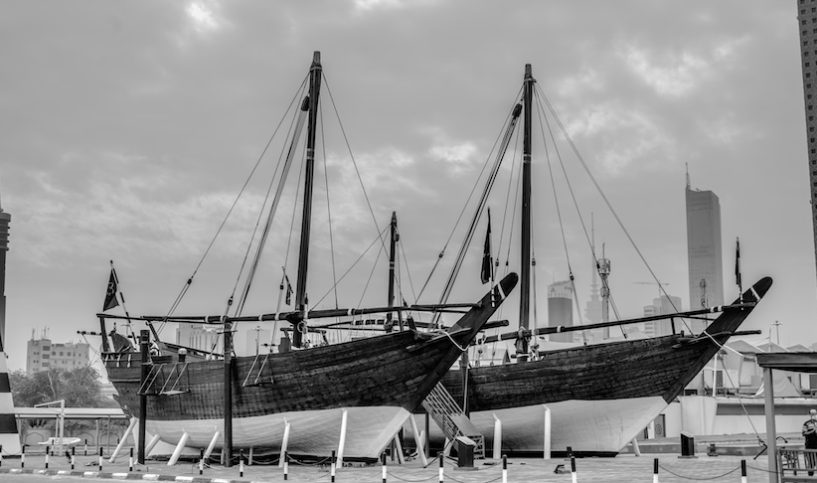
Before Kuwait’s modern skyline, the sea played a central role in its economy and everyday life. Fishing, trading, shipbuilding and pearl diving required specialised knowledge that was developed and shared across generations.
Learning about this maritime heritage reveals a world of practical skills, from understanding the construction of a dhow to recognising the tools and techniques associated with life at sea.
It also introduces the songs, stories and collective experiences that accompanied long journeys across the Gulf.
You do not need to become a sailor to appreciate this history. Understanding the relationship between Kuwait and the sea adds another dimension to the coastline we see every day.
Where to start: Explore Kuwait’s maritime museums and speak to older family members about the stories they remember.
KEEPING HERITAGE ALIVE
The beauty of learning a traditional skill is that you become part of its continuation. You might never master the loom, produce a flawless piece of calligraphy or cook machboos exactly like your grandmother, but the act of learning still matters.
Heritage survives because people remain curious enough to practise it, share it and find new ways to make it relevant.
Sometimes, preserving the past begins with simply asking someone to show you how.