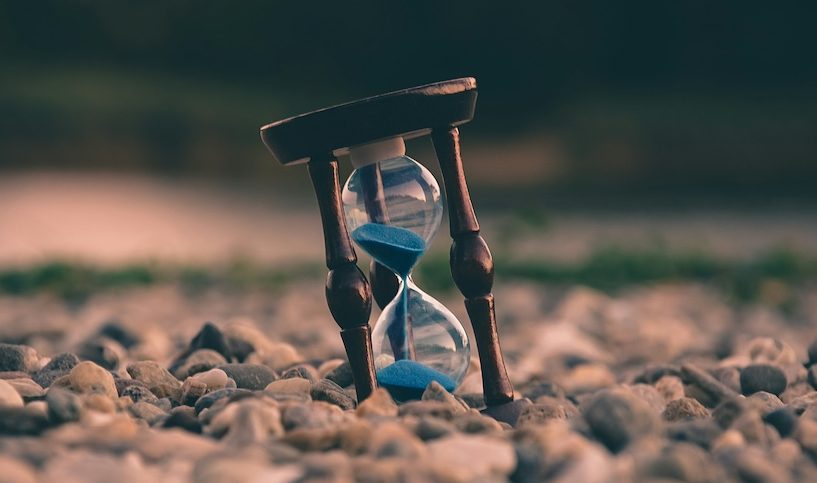
Ask almost anyone over 35 and you will hear the same refrain: time feels like it is speeding up. Weeks blur. Months disappear. Years pass in what feels like a blink. This is not just nostalgia or imagination. Psychologists have long studied this phenomenon, and while clocks do not move faster, our experience of time undeniably changes with age.
One of the earliest explanations comes from psychologist William James, who wrote in The Principles of Psychology, “With the years, the days, weeks, and months seem to speed by with a dreadful rapidity.” His observation, made in the late nineteenth century, remains strikingly relevant. Modern research continues to explore why our internal sense of time shifts as we grow older.
One reason lies in novelty. When we are young, life is filled with firsts. First schools, first friendships, first jobs, first heartbreaks. The brain pays close attention to new experiences because they require learning. These moments are richly encoded in memory, which makes them feel longer in retrospect. A single summer in childhood can feel endless because it is packed with unfamiliar experiences.
As we age, life becomes more routine. Days follow familiar patterns. Commutes repeat. Meals rotate. While routine has many benefits, it also means fewer moments stand out in memory. Psychologists suggest that time feels faster not while we are living it, but when we look back. Fewer distinct memories make periods feel shorter in hindsight.
Another explanation is proportional. Each year represents a smaller fraction of our total lived experience. For a five-year-old, one year is twenty percent of their life. For a fifty-year-old, it is only two percent. This mathematical reality subtly alters perception. As the brain compares new time to accumulated memory, each year feels less substantial than the last.
Attention also plays a role. Children are often fully absorbed in the present. Adults, by contrast, divide attention across responsibilities, worries, and future planning. When attention is fragmented, experiences are processed more shallowly. This results in fewer detailed memories, which again compresses time in retrospect.
Neuroscience adds another layer. Some researchers suggest that dopamine, a neurotransmitter involved in novelty and reward, may influence time perception. New experiences stimulate dopamine release, which can make time feel fuller. With age and routine, dopamine spikes may become less frequent, subtly altering how time is registered.
Importantly, this does not mean time must always feel fast. Studies in psychology consistently show that experiences which demand presence slow our perception of time. Travel, learning a new skill, meaningful conversations, and deep focus all create richer memory traces. These moments stretch time subjectively, even in adulthood.
This explains why certain periods in adult life feel slower than others. A year filled with change, challenge, or emotional intensity often feels longer in retrospect than a year spent on autopilot. Time perception is not tied to age alone. It is tied to engagement.
There is also an emotional component. Stress can accelerate time perception, making days feel rushed and weeks evaporate. Conversely, moments of calm and absorption tend to slow time. This is why people often report that time feels slower on vacation or during creative flow, even if the days are objectively the same length.
Culturally, the idea that time speeds up with age has become a shared narrative. While this can be validating, it can also become self-reinforcing. When we expect time to slip away, we may pay less attention to how we inhabit it. Awareness, in this sense, becomes a tool for reclaiming time.
Psychologists often emphasize the importance of “time richness,” a term used to describe how full and meaningful time feels, rather than how much of it there is. Time richness increases when experiences are varied, emotionally engaging, and aligned with personal values.
The solution is not to chase constant novelty or fill every moment. It is to introduce intentional variation. Changing routines slightly. Learning something unfamiliar. Being fully present for ordinary moments. These choices expand memory and slow the subjective passage of time.
Time may feel faster as we age, but it is not entirely out of our control. While we cannot add hours to the day, we can deepen how those hours are lived. And often, that depth is what makes time feel like it is stretching again, rather than slipping through our fingers.
Photos by Aron Visuals and Djim Loicon Unsplash.