
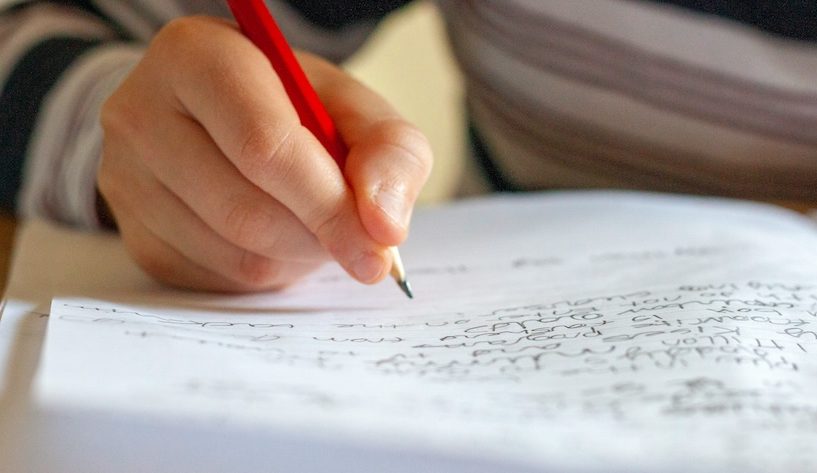
In an age of notes apps, voice memos, and cloud storage, handwriting can feel quaint, even inefficient. Typing is faster. Digital text is searchable. And yet, many people still reach for pen and paper when they need to think clearly, remember deeply, or process something emotional. That instinct is not nostalgia. It is neurological.
Researchers have consistently found that writing by hand engages the brain differently than typing. A well-cited study published in Psychological Science in 2014 showed that students who took notes by hand understood and remembered material better than those who typed verbatim on laptops. The reason was not speed, but processing. Handwriting forced summarization and interpretation, which deepened learning.
Typing encourages transcription. Handwriting encourages thought.
When we write by hand, multiple systems activate at once. Motor movement, spatial awareness, language, and memory work together. Letters are formed deliberately. Words take time. That slowness is not a disadvantage. It creates space for reflection. The brain has time to decide what matters before committing it to the page.
This is why handwritten notes often feel more personal and more memorable. The physical act of shaping words leaves a trace, not just on paper, but in memory. Neuroscientists refer to this as embodied cognition: the idea that thinking is influenced by the body, not just the mind. Writing by hand literally grounds thought.
There is also an emotional dimension. Many people find it easier to process complex feelings through handwriting than through typing. Journaling by hand allows pauses, crossings-out, and changes in direction. The page absorbs hesitation. There is no blinking cursor urging completion. The pace belongs to the writer.
Author Joan Didion once wrote, “I don’t know what I think until I write it down.” While she did not specify the medium, many writers echo the sentiment specifically about handwriting. The page becomes a thinking partner rather than a storage device. Writing reveals thought rather than records it.
Memory is another key difference. Studies in cognitive psychology suggest that handwriting improves recall because it requires more cognitive effort. This effort strengthens neural pathways associated with learning. Typing, especially when done quickly, can bypass this process. The hands move, but the brain remains passive.
This does not mean typing is ineffective. It serves its purpose, particularly for drafting, collaboration, and speed. But when clarity matters more than efficiency, handwriting often wins. This is why many people outline ideas, plan projects, or process decisions on paper before moving to a screen.
There is also a spatial element to handwritten notes. People remember not only the words, but where they were on the page. This visual mapping supports memory in ways linear digital text cannot easily replicate. A margin note, an underline, a circled phrase becomes part of the mental record.
Culturally, handwriting has long been associated with thoughtfulness. Letters, recipes, and journals carry personality in their loops and pressure. While digital communication has increased reach, it has flattened texture. Handwriting restores individuality. No two pages look the same, even when the words do.
In professional life, handwriting can also sharpen focus. Writing during meetings or while thinking through a problem reduces distraction. Unlike screens, paper does not offer notifications. Attention stays anchored. The mind follows the hand.
Importantly, writing by hand is not about rejecting technology. It is about choosing the right tool for the task. Screens are excellent for execution. Paper is powerful for exploration. Knowing when to use each is a form of literacy in itself.
Reintroducing handwriting does not require dramatic changes. A notebook kept nearby. A handwritten to-do list. Morning pages written without structure. These small practices can shift how information is processed and retained.
In a world optimized for speed, handwriting reintroduces intention. It slows thought just enough for meaning to emerge. The pen does not compete with the mind. It collaborates with it.
Writing by hand does not make thinking old-fashioned. It makes it deliberate. And sometimes, deliberation is exactly what clarity requires.
Photo by eleni koureas on Unsplash.