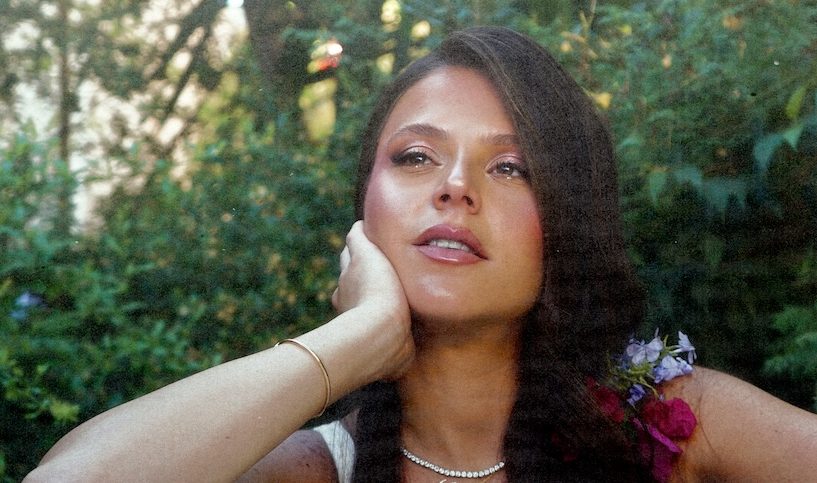
For Reina Khoury, an album was never simply about putting nine songs together. After years of releasing music one single at a time, the Jordanian singer wanted to create something that could reveal more of who she is. The result is REINA, her long-awaited debut album and a deeply personal body of work that brings together the different facets of her life: artist, mother, partner, daughter, sister and friend.
Self-titled by design, REINA is an introduction to the woman behind the music. Khoury had wanted to put her name at the centre of her art for some time, and the album felt like the natural place to do it. As her first full-length release, it offered the space to move beyond the snapshot of a single and create a more complete portrait of herself.
“I wanted it to be an introduction of who I am as a person, covering the different facets of my life,” she says. “Highlighting my name in my art is something I’ve been wanting to do for a long time.”
The album has been two years in the making, but its story began with a conscious decision to step away from the cycle of releasing singles. Khoury had reached a point where she felt that individual songs could not fully communicate who she was as an artist. During that time away from music, she also became a mother, an experience that shifted her perspective and changed the stories she wanted to tell.
“Becoming a mother changed me and my perspective in many different ways,” she explains. “It made me step back and think about what the current stories that I want to talk about are.”
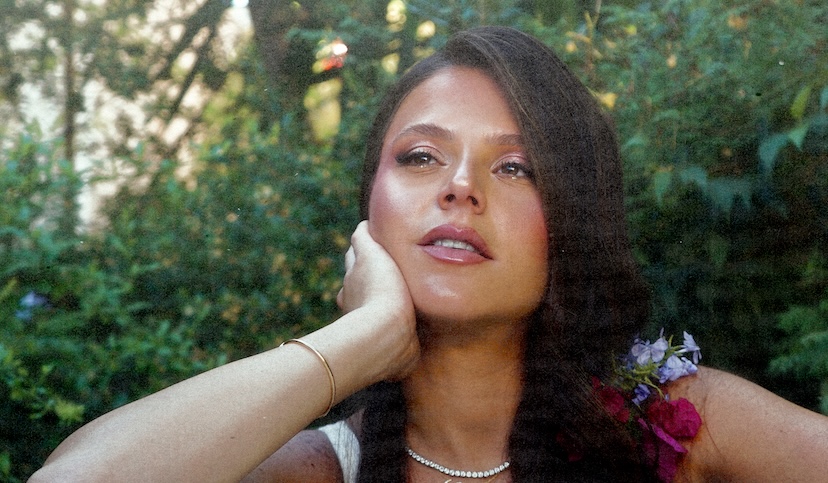
Motherhood became one of the threads running through REINA, but the album is not exclusively about motherhood. Instead, the experience seems to have opened the door to a broader exploration of identity, bringing different sides of Khoury into the same conversation.
That idea is reflected in the album’s structure. Khoury consciously divided REINA into two emotional worlds: strength and confidence on one side, and vulnerability and sensitivity on the other. Some tracks are softer and more classical, while others are bolder and more assured. Rather than choosing between those two sides, she wanted them to coexist.
“I made the conscious decision to have both of those worlds coexist in the album with a specific sequence because it is a depiction of how I have met not only motherhood but also the different facets and aspects of myself,” she says.
The nine tracks move through love, family, femininity, childhood memories, confidence and vulnerability, while remaining rooted in Khoury’s Jordanian identity. The album opens with a whispered poem about motherhood, written by Khoury herself, before moving into Ahla Shu’oor, a song inspired by the overwhelming feeling of becoming a mother. The title translates to “best feeling in the world”, a phrase Khoury found herself using repeatedly when describing the experience.
Elsewhere, Bi Alami and Ana Heik bring a more confident energy, incorporating authentic Jordanian sounds. Usset Hobna takes a romantic turn through a classical Jordanian melody, while the album ultimately comes full circle with Amman, Khoury’s ode to the city where she was born and raised.
Home is an important part of that story. Born and raised in Jordan, Khoury’s music sits between contemporary Arabic pop and the musical heritage that has surrounded her since childhood. Her influences are not limited to particular artists or genres, however. Over the past two years, she found herself repeatedly returning to songs that carried personal memories, particularly those her mother used to play in the car.
“I’m really influenced by the music from my childhood,” she says. “A lot of them are by Lebanese pop artists and I have their albums memorized from the first song to the last.”
Rather than consciously assigning a particular influence to each track, Khoury describes the album as an accumulation of everything that has shaped her over the years. That includes her musical upbringing, her experiences and the evolving perspective that came with motherhood.
Creating an album also meant expanding the way she worked with other artists. Shereef Mostafa, who produced three tracks and mixed the album, became an important creative influence throughout the process. Khoury describes him as a mentor who guided her not only through production, but also through decisions around the album’s sequencing and release.
“Shereef has been a mentor in so many ways over the past two years,” she says. “Whether it comes to production, the sequence of the album, or how I’m going to release it, I’ve really learnt a lot from him.”
She also worked with longtime collaborator Joseph Demerjian, with whom she created Ana Heik. The collaboration reinforced her appreciation for live music and for celebrating regional culture and sound. For the album, Khoury also worked with songwriter Dabaseh, marking her first collaboration with a songwriter and introducing another dimension to her creative process.
The experience of creating a full-length body of work has ultimately been a learning curve for Khoury. Moving away from individual singles gave her the chance to step back and build a complete story, while also discovering new abilities within herself.
“It’s been incredible to create an entire album and it has taught me so much,” she says. “It’s been a big learning curve with lots of ups and downs.”
She describes the process as putting her “in a cocoon” for a time, allowing her to compose and write a story in its entirety. The result is an album that feels less like a collection of standalone moments and more like a reflection of a particular point in her life.
Now, after two years of shaping REINA, Khoury is facing the final and perhaps most vulnerable part of the process: letting it go. The songs that began as deeply personal expressions are now available for listeners to interpret through their own experiences.
“I still cannot believe that it is something the whole world can hear now,” she says. “It felt magical to create it from the ground up and seeing it out in the world makes me very emotional and very happy.”
What she hopes listeners find in the album is not necessarily a single message, but a point of connection. She is curious to see how people relate to the songs and, ultimately, how they make them their own. Her hope is that the emotions and stories captured in REINA might help listeners articulate something they have struggled to put into words.
In that sense, the album’s title feels fitting. REINA is very much about Khoury, but it is also about allowing listeners to meet the many versions of her that exist beyond the artist they have encountered through individual songs. After stepping away, looking inward and giving herself the space to tell a larger story, Reina Khoury returns not simply with a debut album, but with a fuller introduction to herself.
Follow Reina’s musical journey by following her on Instagram @reinakhoury.